English
 Español
 tiếng việt
 русский
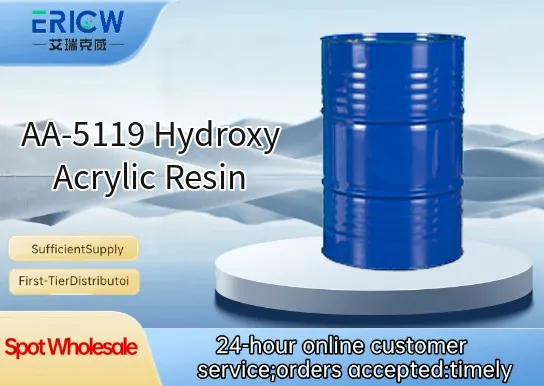
High hydroxyl functionality for excellent crosslinking efficiency with melamine and isocyanate curing agents.
Superior weather resistance and UV stability, ensuring long-term gloss and color retention in exterior coatings.
Low viscosity at high solids content, enabling formulation flexibility and reduced VOC emissions.
Excellent compatibility with common solvent-borne resins and pigments, supporting robust dispersion and film formation.
Consistent batch-to-batch performance, meeting stringent quality control requirements for industrial OEM applications.
Automotive OEM topcoats and clearcoats.
Industrial maintenance coatings for metal substrates.
High-performance coil coatings.
Premium architectural metal finishes.
General-purpose baking enamels for appliances and furniture.
| Chemical Type | Hydroxy-functional acrylic copolymer |
| Product Form | Liquid resin solution |
| Appearance | Clear to slightly pale yellow, homogeneous liquid |
| Solvent System | Aromatic-free (proprietary aliphatic/ester blend) |
| Solids Content (wt%) | 55 ± 2% |
| Hydroxyl Value (mg KOH/g) | 85–95 |
| Acid Value (mg KOH/g) | < 5 |
| Viscosity (DIN 4, 25°C) | 8,000–12,000 mPa·s |
Q1: What is the primary functional role of AA-5119 in coating formulations?
A: AA-5119 serves as a hydroxyl-functional acrylic resin designed to act as a reactive co-resin in thermosetting systems—particularly with amino crosslinkers (e.g., melamine or urea formaldehyde resins) and polyisocyanates. Its pendant hydroxyl groups enable covalent network formation during cure, enhancing hardness, chemical resistance, and film integrity.
Q2: Is AA-5119 suitable for high-solids or low-VOC coating systems?
A: Yes—AA-5119 is formulated to deliver good solution viscosity at elevated solids content, making it well-suited for high-solids architectural, industrial, and automotive refinish applications where VOC reduction is a priority. It can be effectively integrated into solvent-borne systems targeting <400 g/L VOC, and may also serve as a backbone resin in certain hybrid or co-solvent-reduced formulations.
Q3: How does AA-5119 compare to conventional polyester-based hydroxyl resins in terms of weatherability and yellowing resistance?
A: As an acrylic-based hydroxyl resin, AA-5119 offers inherently superior UV stability and resistance to photo-oxidative degradation compared to aromatic polyester alternatives. It exhibits minimal yellowing upon prolonged exposure to UV light and thermal aging, supporting long-term gloss retention and color fidelity—especially in exterior topcoats and clearcoats.
Q4: What solvents are typically recommended for diluting or processing AA-5119?
A: AA-5119 is compatible with common organic solvents used in industrial coatings, including xylene, toluene, mineral spirits, butyl acetate, and propylene glycol monomethyl ether acetate (PGMEA). Solvent selection should consider evaporation rate, compatibility with other formulation components, and regulatory constraints—always verify solubility and stability via small-scale testing before full-scale use.
Contact With Us:
E-mail: wangxingqiang@ericwchem.com
Have a Questions? Call Us:
Add:
Building A1, Jiete Industrial Park, Huangpu District, Guangzhou City, Guangdong Province, China