English
 Español
 tiếng việt
 русский
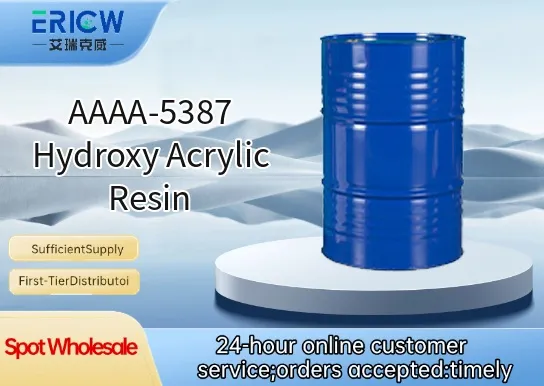
High hydroxyl functionality (OH# 120–140 mg KOH/g) for excellent crosslinking efficiency with melamine and polyisocyanate curing agents.
Superior weather resistance and UV stability, maintaining gloss and color retention in demanding outdoor applications.
Low viscosity (4,000–6,000 cP at 25°C) enabling high-solids formulation with reduced VOC emissions.
Excellent compatibility with common acrylics, alkyds, and polyester resins for hybrid coating systems.
Consistent batch-to-batch reproducibility supported by strict in-process QC and GMP-aligned manufacturing.
Automotive OEM clearcoats and basecoats requiring high film integrity and chip resistance.
Industrial maintenance coatings for metal substrates in infrastructure and agricultural equipment.
High-performance coil coatings for pre-painted steel used in building façades and appliances.
Powder coating hybrids where hydroxyl functionality enables low-cure-temperature crosslinking.
UV-curable hybrid topcoats leveraging synergistic reactivity with acrylate-functional co-resins.
| Chemical Type | Hydroxy-functional acrylic copolymer |
| Product Form | Liquid resin in aromatic hydrocarbon solvent blend |
| Appearance | Clear, pale yellow liquid, free of sediment or haze |
| Hydroxyl Value (OH#) | 120–140 mg KOH/g |
| Acid Value | < 5 mg KOH/g |
| Non-Volatile Content | 55 ± 2 wt% (at 120°C, 60 min) |
| Viscosity (25°C) | 4,000–6,000 cP (Brookfield RV-DV2T, spindle #3, 20 rpm) |
| Density (25°C) | 0.94–0.97 g/cm³ |
Q1: What is the primary functional role of AAAA-5387 in coating formulations?
A: AAAA-5387 serves as a hydroxyl-functional acrylic resin designed to act as a reactive co-resin in thermosetting systems—particularly with amino crosslinkers (e.g., melamine or urea formaldehydes) and polyisocyanates. Its pendant hydroxyl groups enable covalent network formation during cure, enhancing hardness, chemical resistance, and film integrity.
Q2: Is AAAA-5387 compatible with common solvent-based and high-solids coating systems?
A: Yes, AAAA-5387 exhibits good solubility in standard organic solvents such as xylene, toluene, butyl acetate, and ketones. It is widely used in both conventional solvent-borne and high-solids industrial coatings, including automotive OEM and refinish applications, where balanced viscosity and reactivity are required.
Q3: How does AAAA-5387 contribute to film performance compared to non-hydroxy acrylic resins?
A: Unlike non-reactive acrylics, AAAA-5387 participates chemically in the crosslinking reaction, resulting in significantly improved crosslink density. This translates to superior mar resistance, enhanced solvent resistance after cure, better substrate adhesion, and greater thermal stability—without relying solely on physical film formation.
Q4: What are typical handling and storage recommendations for AAAA-5387?
A: Store in tightly sealed containers under cool, dry conditions away from direct sunlight and moisture. Avoid prolonged exposure to high humidity or temperatures above 40 °C, as this may affect viscosity stability or promote premature reaction with ambient moisture or acidic contaminants.
Q5: Can AAAA-5387 be used in water-reducible or hybrid systems?
A: While primarily formulated for solvent-based systems, AAAA-5387 can be incorporated into water-reducible coatings when properly neutralized and dispersed—typically alongside other water-compatible resins and surfactants. Performance in such systems depends heavily on formulation balance and pH control; laboratory evaluation is recommended prior to scale-up.
Contact With Us:
E-mail: wangxingqiang@ericwchem.com
Have a Questions? Call Us:
Add:
Building A1, Jiete Industrial Park, Huangpu District, Guangzhou City, Guangdong Province, China