English
 Español
 tiếng việt
 русский
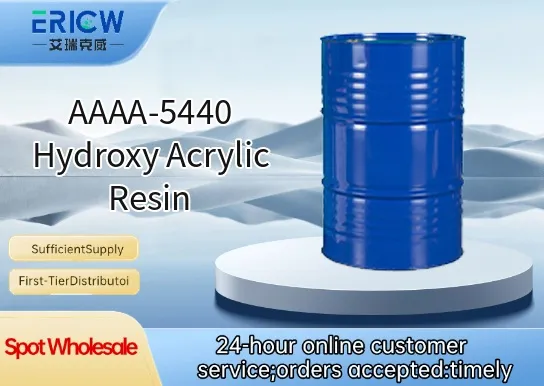
High hydroxyl functionality for excellent crosslinking efficiency with isocyanates and melamine resins.
Outstanding weather resistance and UV stability, suitable for long-term outdoor exposure.
Low viscosity at high solids content, enabling high-solids formulation with improved VOC reduction.
Superior compatibility with common automotive and industrial coating additives and pigments.
Consistent batch-to-batch reproducibility and narrow molecular weight distribution.
Automotive OEM clearcoats and basecoats.
Industrial maintenance coatings for metal substrates.
High-performance coil coatings for architectural and appliance applications.
Premium wood finishes requiring durability and clarity.
Two-component polyurethane topcoats for heavy-duty equipment.
| Chemical Type | Hydroxy-functional acrylic copolymer |
| Product Form | Liquid resin solution |
| Appearance | Clear, pale yellow liquid |
| Solids Content (wt%) | 60 ± 2% |
| Hydroxyl Value (mg KOH/g) | 85–95 |
| Acid Value (mg KOH/g) | < 5 |
| Viscosity (25°C, mPa·s) | 3,000–5,000 (Brookfield LV, spindle #3, 12 rpm) |
| Primary Applications | 2K PU and melamine-cured industrial and automotive coatings |
Q1: What is the primary functional role of AAAA-5440 in coating formulations?
A: AAAA-5440 serves as a hydroxyl-functional acrylic resin, primarily used as a reactive binder in two-component polyurethane and polyester-based coating systems. Its pendant hydroxyl groups enable covalent crosslinking with isocyanate or melamine curing agents, contributing to enhanced film hardness, chemical resistance, and durability.
Q2: Is AAAA-5440 compatible with common solvent-based and high-solids coating systems?
A: Yes, AAAA-5440 exhibits good solubility in standard organic solvents such as xylene, mineral spirits, and ester/ketone blends. It is formulated for use in both conventional solvent-borne and high-solids architectural and industrial coatings, and demonstrates stable compatibility with typical acrylic, polyester, and alkyd resins when properly balanced in the formulation.
Q3: How does AAAA-5440 influence cure speed and pot life in 2K PU systems?
A: As a mid-to-high hydroxyl value acrylic resin, AAAA-5440 supports efficient crosslink density development during ambient or forced-dry curing. Its reactivity profile allows for practical pot lives—typically several hours at room temperature—when paired with standard aliphatic isocyanate hardeners, though exact working time depends on catalyst level, solvent blend, and ambient conditions.
Q4: Can AAAA-5440 be used in low-VOC or water-reducible systems?
A: While AAAA-5440 is supplied in solvent-based form, it can be adapted into water-reducible hybrid systems via solvent exchange or emulsification with appropriate surfactants and co-solvents. For fully aqueous applications, reformulation support and compatibility testing are recommended, as the base resin is not inherently water-dispersible.
Contact With Us:
E-mail: wangxingqiang@ericwchem.com
Have a Questions? Call Us:
Add:
Building A1, Jiete Industrial Park, Huangpu District, Guangzhou City, Guangdong Province, China