English
 Español
 tiếng việt
 русский
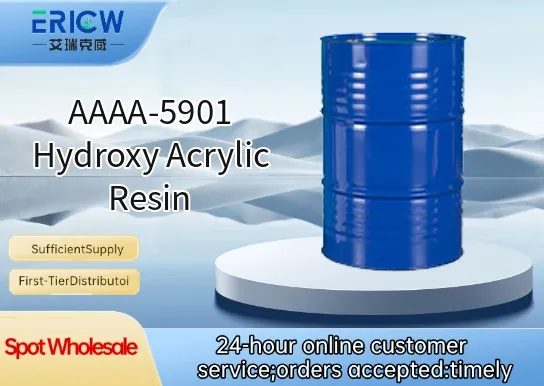
High hydroxyl functionality (OH# 85–95 mg KOH/g) for excellent crosslinking efficiency with melamine and polyisocyanate curing agents.
Outstanding weather resistance and UV stability, maintaining gloss and color retention in demanding outdoor environments.
Low solution viscosity at high solids content (60 ± 2% in xylene/BA blend), enabling high-transfer-efficiency coatings with reduced VOC emissions.
Superior compatibility with common acrylic, polyester, and cellulose ester resins, facilitating versatile formulation flexibility.
Good storage stability (>12 months at 25°C) without gelling or phase separation under recommended handling conditions.
Automotive OEM clearcoats and basecoats requiring high DOI, scratch resistance, and long-term durability.
Industrial maintenance coatings for metal substrates, including agricultural and construction equipment.
High-performance coil coatings where corrosion protection and formability are critical.
Premium architectural metal finishes for façades, roofing, and cladding systems.
Plastic coatings for automotive interior trim and electronic housings requiring adhesion and flexibility.
| Chemical Type | Hydroxy-functional acrylic copolymer |
| Product Form | Liquid resin solution |
| Appearance | Clear, pale yellow liquid |
| Solids Content (wt%) | 60 ± 2% (in xylene/butyl acetate 50/50) |
| Hydroxyl Value (mg KOH/g) | 85–95 |
| Acid Value (mg KOH/g) | < 5 |
| Viscosity (mPa·s, 25°C) | 4,000–7,000 (Brookfield RV, spindle #3, 20 rpm) |
| Density (g/cm³, 25°C) | 0.98–1.02 |
Q1: What is the primary functional role of AAAA-5901 in coating formulations?
A: AAAA-5901 serves as a hydroxyl-functional acrylic resin designed to act as a reactive binder in thermosetting systems—particularly those crosslinked with melamine, urea, or polyisocyanate curing agents. Its hydroxyl groups enable covalent network formation during cure, contributing to enhanced hardness, chemical resistance, and film integrity.
Q2: Is AAAA-5901 compatible with common solvent-based and high-solids coating systems?
A: Yes, AAAA-5901 exhibits good solubility in typical organic solvents such as xylene, butyl acetate, and methyl amyl ketone, and is widely used in both conventional solvent-borne and high-solids industrial coatings. Compatibility with other resins—including alkyds, polyesters, and epoxy-modified acrylics—should be verified experimentally under intended formulation conditions.
Q3: How does AAAA-5901 influence cure speed and final film properties compared to non-hydroxy acrylic resins?
A: Unlike non-reactive acrylic resins, AAAA-5901 participates chemically in the crosslinking reaction, enabling faster development of through-cure at elevated temperatures and delivering superior mar resistance, flexibility balance, and long-term durability. The extent of property enhancement depends on hydroxyl value, cure temperature profile, and crosslinker selection.
Q4: Can AAAA-5901 be used in low-VOC or water-reducible systems?
A: While AAAA-5901 is supplied as a solvent-based resin, it can serve as a key component in water-reducible formulations when properly emulsified or hybridized with hydrophilic monomers. Formulators should assess stability, dispersion quality, and post-cure performance—especially in applications requiring compliance with evolving VOC regulations.
Contact With Us:
E-mail: wangxingqiang@ericwchem.com
Have a Questions? Call Us:
Add:
Building A1, Jiete Industrial Park, Huangpu District, Guangzhou City, Guangdong Province, China