English
 Español
 tiếng việt
 русский
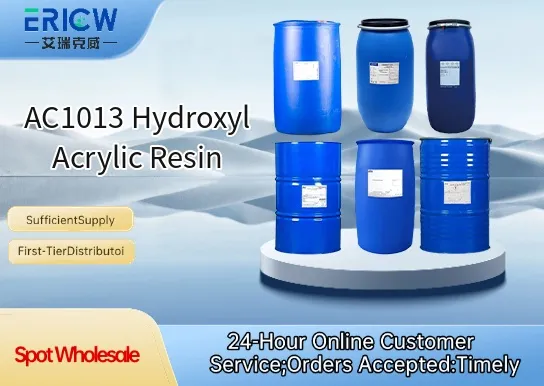
High hydroxyl functionality for robust crosslinking with isocyanates and melamine formaldehyde resins.
Excellent weather resistance and UV stability, maintaining gloss and color retention in exterior coatings.
Good compatibility with common solvent-based and high-solids coating systems.
Low viscosity profile enabling high-solids formulation without sacrificing flow and leveling.
Consistent molecular weight distribution ensuring reproducible film formation and curing performance.
Automotive OEM and refinish topcoats requiring high-gloss, chip-resistant finishes.
Industrial maintenance coatings for metal substrates exposed to harsh environmental conditions.
General-purpose coil coatings where durability and formability are critical.
High-performance plastic coatings for automotive interior and exterior trim components.
Architectural metallic and pearlescent effect coatings for façade and cladding applications.
| Chemical Type | Hydroxyl-functional acrylic copolymer |
| Product Form | Liquid resin in organic solvent blend |
| Appearance | Clear, pale yellow to amber liquid |
| Hydroxyl Value (mg KOH/g) | 75–85 |
| Acid Value (mg KOH/g) | < 5 |
| Solids Content (% by weight) | 55 ± 2 |
| Viscosity (25°C, mPa·s) | 4,000–6,000 (measured in 60% xylene solution) |
| Density (25°C, g/cm³) | 0.92–0.96 |
Q1: What is the primary function of AC1013 in coating formulations?
A: AC1013 serves as a hydroxyl-functional acrylic resin that provides backbone reactivity for crosslinking with melamine, polyisocyanate, or other multifunctional curing agents—enhancing hardness, chemical resistance, and film integrity in thermosetting coatings.
Q2: Is AC1013 compatible with common solvent-based and high-solids coating systems?
A: Yes, AC1013 exhibits good solubility in standard organic solvents such as xylene, toluene, and esters, and is widely used in both conventional solvent-borne and high-solids thermoset coating systems without significant viscosity instability or phase separation issues.
Q3: How does AC1013 compare to polyester-based hydroxyl resins in terms of UV stability and gloss retention?
A: As an acrylic resin, AC1013 offers superior UV resistance and long-term gloss retention compared to many alkyd or polyester hydroxyl resins—making it particularly suitable for exterior architectural and automotive topcoat applications where color and clarity stability are critical.
Q4: Can AC1013 be used in low-VOC or water-reducible formulations?
A: While AC1013 itself is solvent-soluble, it can be incorporated into water-reducible systems when properly dispersed or modified with co-solvents and surfactants—though formulation optimization is required to ensure colloidal stability and crosslink efficiency.
Contact With Us:
E-mail: wangxingqiang@ericwchem.com
Have a Questions? Call Us:
Add:
Building A1, Jiete Industrial Park, Huangpu District, Guangzhou City, Guangdong Province, China