English
 Español
 tiếng việt
 русский
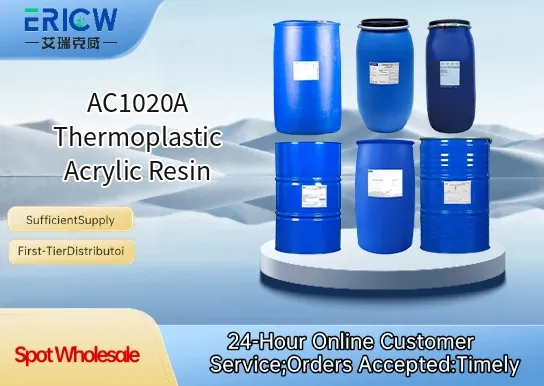
Excellent clarity and UV resistance for long-term outdoor durability.
High melt flow index enabling efficient extrusion and injection molding processing.
Good solvent solubility in common ketones, esters, and aromatic hydrocarbons.
Low moisture absorption ensuring dimensional stability in humid environments.
Compatible with polycarbonate (PC) and ABS for engineering blend formulations.
Automotive exterior trim and light covers requiring high gloss and weatherability.
Consumer electronics housings demanding optical clarity and scratch resistance.
Medical device components where biocompatibility-supporting grades are used.
Architectural glazing and signage panels for impact-modified transparent systems.
Industrial coatings binders for high-solids, low-VOC thermoplastic acrylic finishes.
| Chemical Type | Thermoplastic acrylic copolymer |
| Product Form | Pellets |
| Appearance | White to off-white translucent pellets |
| Primary Applications | Exterior automotive parts, optical components, industrial coatings |
| Key Features | UV stability, melt processability, solvent solubility, blend compatibility |
| Benefits | Reduced yellowing, consistent flow behavior, formulation flexibility |
| Storage Conditions | Store in dry, cool, well-ventilated area; protect from moisture and direct sunlight |
Q1: What are the primary processing methods suitable for AC1020A?
A: AC1020A is designed for melt-processing techniques including extrusion, injection molding, and film casting. Its thermoplastic nature allows for repeated thermal cycling without chemical degradation, making it well-suited for high-speed industrial processing lines.
Q2: How does AC1020A enhance surface properties in coating and ink formulations?
A: AC1020A imparts excellent gloss, mar resistance, and substrate adhesion when incorporated into solvent-based or high-solids coatings and gravure/flexographic inks. Its linear acrylic architecture supports rapid solvent release and uniform film formation without excessive resin tackiness.
Q3: Is AC1020A compatible with common plastic substrates used in packaging applications?
A: Yes — AC1020A demonstrates good compatibility with polyolefins (e.g., PP, PE), PET, and PVC, especially when used as a tie-layer modifier or surface modifier in multilayer structures. Adhesion performance is further enhanced with appropriate corona or flame treatment of the substrate.
Q4: What solvents can be used to dissolve AC1020A effectively?
A: AC1020A dissolves readily in aromatic hydrocarbons (e.g., toluene, xylene), ketones (e.g., MEK, acetone), and esters (e.g., ethyl acetate). It exhibits limited solubility in aliphatic hydrocarbons and water, and should not be processed in strongly polar protic solvents like ethanol or glycols without formulation adjustment.
Q5: How should AC1020A be stored to maintain optimal performance?
A: Store in original sealed containers in a cool, dry, well-ventilated area away from direct sunlight and heat sources. Prolonged exposure to elevated temperatures or humidity may affect flow characteristics and dissolution kinetics; therefore, controlled ambient storage is recommended for long-term stability.
Contact With Us:
E-mail: wangxingqiang@ericwchem.com
Have a Questions? Call Us:
Add:
Building A1, Jiete Industrial Park, Huangpu District, Guangzhou City, Guangdong Province, China