English
 Español
 tiếng việt
 русский
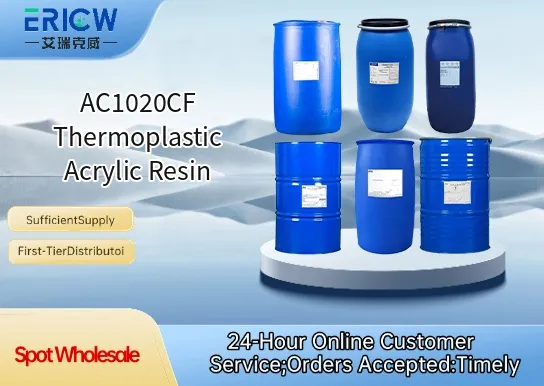
Excellent clarity and UV resistance for long-term outdoor durability.
High melt flow index enabling efficient extrusion and injection molding processing.
Good solvent solubility in common ketones and esters, facilitating coating formulation.
Low moisture absorption ensuring dimensional stability in humid environments.
Compatible with polycarbonate and ABS for engineering-grade alloy applications.
Automotive exterior trim and light covers requiring weatherability and gloss retention.
Transparent protective films for electronic displays and touch panels.
Medical device housings where biocompatibility support and sterilization resistance are needed.
Architectural glazing profiles and decorative panels for commercial buildings.
Consumer electronics enclosures demanding scratch resistance and optical clarity.
| Chemical Type | Thermoplastic acrylic copolymer |
| Product Form | Pellets |
| Appearance | Translucent white granules |
| Primary Applications | Extrusion, injection molding, solvent-based coatings |
| Key Features | High transparency, thermal processability, UV stability |
| Benefits | Reduced yellowing, excellent surface hardness, low VOC formulation potential |
| Processing Temperature Range | 180–220 °C |
| Density (g/cm³) | 1.18–1.20 |
Q1: What is the primary function of AC1020CF in thermoplastic formulations?
A: AC1020CF serves as a high-molecular-weight thermoplastic acrylic resin designed to enhance surface hardness, gloss retention, and thermo-mechanical stability in engineering thermoplastics—particularly in ABS, PC/ABS, and polyolefin blends. It functions primarily as a performance modifier rather than a primary binder or matrix resin.
Q2: Is AC1020CF compatible with common polymer processing methods?
A: Yes, AC1020CF is specifically engineered for compatibility with standard thermoplastic processing techniques including injection molding, extrusion, and compounding. Its thermal stability allows for melt processing at typical temperatures used for ABS and PC-based systems without significant degradation or volatilization.
Q3: How does AC1020CF affect impact resistance and flow behavior in finished compounds?
A: When incorporated at appropriate levels, AC1020CF generally maintains or slightly improves notched Izod impact strength while contributing to enhanced melt viscosity control. It may moderately increase melt viscosity depending on loading and base resin, so rheological optimization during compounding is recommended for high-flow applications.
Q4: Can AC1020CF be used in applications requiring FDA-compliant or food-contact-safe formulations?
A: AC1020CF is not pre-certified for direct food contact. While it contains no intentionally added heavy metals or known regulated plasticizers, regulatory compliance must be evaluated case-by-case by the compounder based on final formulation, processing conditions, and applicable jurisdictional requirements.
Contact With Us:
E-mail: wangxingqiang@ericwchem.com
Have a Questions? Call Us:
Add:
Building A1, Jiete Industrial Park, Huangpu District, Guangzhou City, Guangdong Province, China