English
 Español
 tiếng việt
 русский
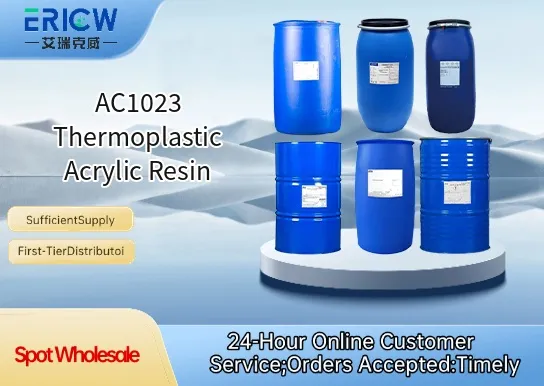
Excellent clarity and UV resistance for long-term outdoor durability.
High melt flow index enabling easy processing via extrusion and injection molding.
Good solvent solubility in common organic solvents including toluene, xylene, and ethyl acetate.
Low moisture absorption ensuring dimensional stability in humid environments.
Non-yellowing performance under thermal aging and accelerated weathering conditions.
Automotive exterior trim and light covers requiring high gloss and weatherability.
Transparent protective coatings for signage, displays, and architectural glazing.
Medical device housings where biocompatibility-supporting processing and clarity are critical.
Consumer electronics casings demanding scratch resistance and aesthetic finish.
Industrial lenses and optical components requiring consistent refractive index and low birefringence.
| Chemical Type | Thermoplastic acrylic copolymer |
| Product Form | Pellets |
| Appearance | Translucent white to colorless granules |
| Melt Flow Index (230°C/3.8 kg) | 8–12 g/10 min |
| Density (23°C) | 1.18–1.20 g/cm³ |
| Moisture Content (as received) | ≤ 0.3 wt% |
| Vicat Softening Temperature | 105–110°C |
| Primary Applications | Extrusion, injection molding, solvent-based coatings |
Q1: What are the primary processing methods suitable for AC1023?
A: AC1023 is designed for thermoplastic processing techniques including extrusion, injection molding, and solution casting. Its low melt viscosity and excellent thermal stability support consistent flow and minimal degradation during standard polymer processing conditions.
Q2: How does AC1023 contribute to film clarity and surface hardness in coatings?
A: As a high-purity thermoplastic acrylic resin, AC1023 imparts exceptional optical clarity, gloss retention, and improved scratch resistance to solvent-based and hot-melt coating systems. Its linear molecular structure promotes uniform film formation without haze or bloom.
Q3: Is AC1023 compatible with common plasticizers and other thermoplastic resins?
A: Yes — AC1023 demonstrates good compatibility with ester- and phosphate-based plasticizers, as well as with other acrylics, cellulose derivatives, and select polyvinyl resins. Compatibility should be verified empirically in the final formulation due to sensitivity to polarity and molecular weight distribution.
Q4: Can AC1023 be used in food-contact applications?
A: AC1023 is manufactured under controlled conditions and may be considered for certain indirect food-contact uses, such as packaging overcoats or laminating adhesives, subject to full regulatory review and end-use compliance verification by the formulator.
Contact With Us:
E-mail: wangxingqiang@ericwchem.com
Have a Questions? Call Us:
Add:
Building A1, Jiete Industrial Park, Huangpu District, Guangzhou City, Guangdong Province, China