English
 Español
 tiếng việt
 русский
Excellent clarity and UV resistance for long-term optical performance.
High melt flow index enabling efficient extrusion and injection molding.
Good solvent solubility in common organic solvents including methyl ethyl ketone (MEK) and toluene.
Outstanding weatherability and color stability under outdoor exposure conditions.
Low moisture absorption ensuring dimensional stability in humid environments.
Automotive exterior trim and lighting lenses.
Transparent protective coatings for signage and displays.
Medical device housings requiring biocompatibility and sterilization compatibility.
3D printing filaments for high-clarity functional prototypes.
Co-extruded barrier layers in packaging films for premium consumer goods.
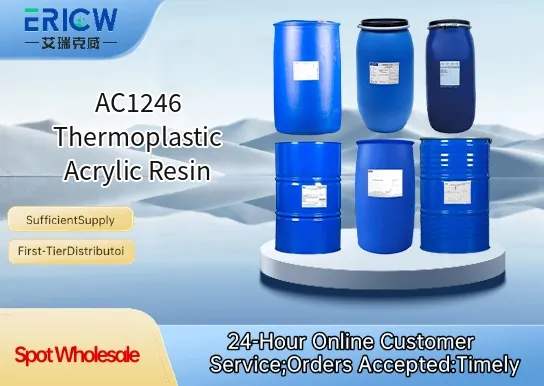
| Chemical Type | Thermoplastic acrylic copolymer |
| Product Form | Pellets |
| Appearance | Translucent white granules |
| Primary Applications | Extrusion, injection molding, solvent coating |
| Key Features | High transparency, UV stability, thermal processability |
| Benefits | Reduced yellowing, excellent surface gloss, recyclable |
| Glass Transition Temperature (Tg) | Approx. 105 °C (DSC, 10 °C/min) |
| Melt Flow Index (MFI) | 8–12 g/10 min @ 230 °C / 3.8 kg |
Q1: What are the primary processing methods suitable for AC1246?
A: AC1246 is designed for melt-processing techniques including extrusion, injection molding, and calendering. Its thermoplastic nature allows for repeated melting and solidification without chemical degradation, making it well-suited for high-speed industrial fabrication where thermal stability and consistent melt flow are required.
Q2: How does AC1246 contribute to surface performance in coatings and inks?
A: AC1246 enhances gloss, mar resistance, and substrate adhesion in solvent-based and high-solids coating systems. Its linear acrylic architecture provides excellent film clarity and hardness while maintaining flexibility, supporting durable, aesthetically consistent finishes on plastics, metals, and printed substrates.
Q3: Is AC1246 compatible with common plasticizers and other thermoplastic resins?
A: Yes—AC1246 demonstrates good compatibility with a range of conventional plasticizers (e.g., phthalates, adipates) and blends readily with other thermoplastic polymers such as PVC, cellulose esters, and certain polyolefin-modified systems. Compatibility should be verified empirically in the final formulation due to sensitivity to polarity and molecular weight distribution.
Q4: What solvent systems dissolve AC1246 effectively?
A: AC1246 exhibits excellent solubility in aromatic hydrocarbons (e.g., xylene, toluene), ketones (e.g., MEK, acetone), and esters (e.g., ethyl acetate, butyl acetate). It has limited solubility in aliphatic hydrocarbons and water, and is generally incompatible with low-polarity solvents like hexane or heptane.
Contact With Us:
E-mail: wangxingqiang@ericwchem.com
Have a Questions? Call Us:
Add:
Building A1, Jiete Industrial Park, Huangpu District, Guangzhou City, Guangdong Province, China