English
 Español
 tiếng việt
 русский
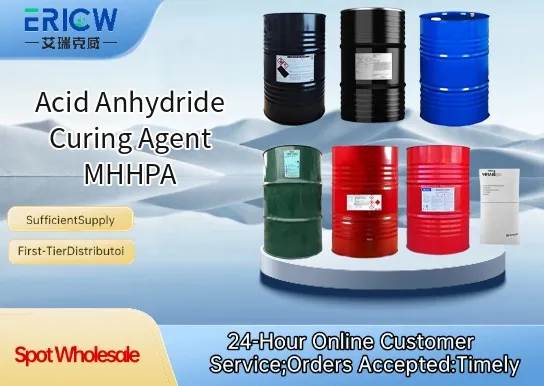
High reactivity with epoxy resins at moderate cure temperatures (100–140 °C), enabling efficient processing and reduced cycle times.
Excellent electrical insulation properties, including low dielectric loss and high volume resistivity, ideal for high-reliability electronic encapsulation.
Superior thermal stability and glass transition temperature (Tg) retention in cured epoxy systems, supporting long-term performance above 150 °C.
Low volatility and minimal exotherm during curing, enhancing safety and reducing internal stress in thick-section castings.
Good compatibility with standard bisphenol-A and novolac epoxy resins, facilitating formulation flexibility without phase separation.
Electrical insulation of high-voltage dry-type transformers and reactors.
Encapsulation and potting of power electronics, including IGBT modules and EV battery management systems.
Casting of high-performance busbars, insulators, and switchgear components for energy infrastructure.
Structural adhesives requiring elevated thermal and dielectric performance in aerospace and rail applications.
Laminating resin for high-Tg prepregs used in printed circuit board (PCB) substrates and advanced composites.
| Chemical Type | Methylhexahydrophthalic anhydride (MHHPA), alicyclic acid anhydride |
| Product Form | Pale yellow to light amber liquid |
| Appearance | Clear, transparent, free from visible particulates or haze |
| Acid Value (mg KOH/g) | 670–690 |
| Refractive Index (n20D) | 1.485–1.492 |
| Viscosity (mPa·s at 25 °C) | 35–55 |
| Flash Point (°C, closed cup) | ≥155 |
| Primary Applications | Epoxy resin curing for electrical insulation, encapsulation, and structural composites |
Q1: What is MHHPA and how does it function as a curing agent?
A: MHHPA (Methylhexahydrophthalic Anhydride) is a liquid acid anhydride widely used to cure epoxy resins. It reacts with epoxy groups under thermal activation to form stable ester linkages, delivering excellent electrical insulation, low viscosity for easy processing, and good thermal stability in the final cured network.
Q2: What are the typical processing conditions required for MHHPA-cured epoxy systems?
A: MHHPA typically requires elevated temperature curing—commonly initiated around 90–110 °C, followed by a post-cure step between 130–160 °C to achieve full crosslink density and optimal mechanical performance. Accelerators such as tertiary amines may be used to moderate reactivity and extend pot life.
Q3: How does MHHPA compare to other common anhydride curing agents in terms of handling and performance?
A: Compared to solid anhydrides like HHPA or nadic methyl anhydride, MHHPA offers lower melting point and better miscibility with epoxy resins at room temperature—reducing the need for pre-heating and simplifying formulation. Its aliphatic-cycloaliphatic structure contributes to balanced toughness, low exotherm, and improved moisture resistance relative to purely aromatic alternatives.
Q4: Is MHHPA suitable for applications requiring high electrical insulation and low dielectric loss?
A: Yes—MHHPA-cured epoxy systems are widely selected for high-voltage electrical insulation, including cast resin transformers, bushings, and encapsulation of electronic components, due to their inherently low ionic impurity content, excellent volume resistivity, and stable dielectric properties across humidity and temperature variations.
Q5: What safety and handling precautions should be observed when working with MHHPA?
A: As with most acid anhydrides, MHHPA is a skin and respiratory sensitizer. Users should wear appropriate PPE—including nitrile gloves, chemical-resistant goggles, and ventilation control—to minimize exposure. Avoid contact with moisture during storage, as hydrolysis can reduce reactivity and generate acidic by-products.
Contact With Us:
E-mail: wangxingqiang@ericwchem.com
Have a Questions? Call Us:
Add:
Building A1, Jiete Industrial Park, Huangpu District, Guangzhou City, Guangdong Province, China