English
 Español
 tiếng việt
 русский
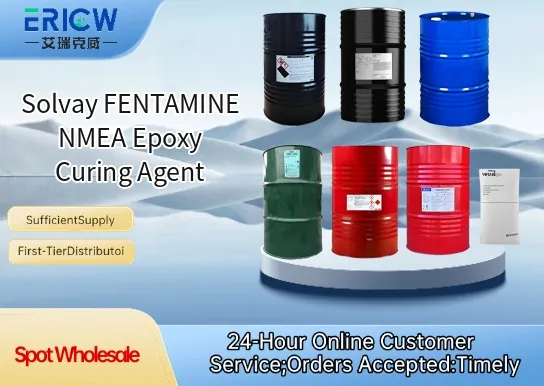
High reactivity with standard epoxy resins, enabling rapid cure at ambient or moderate elevated temperatures.
Excellent chemical resistance in cured formulations, particularly against alkalis and polar solvents.
Low volatility and low skin sensitization potential compared to traditional amine curing agents.
Good compatibility with bisphenol-A and bisphenol-F epoxy systems, supporting broad formulation flexibility.
Enables high glass transition temperature (Tg) and mechanical strength in final cured composites.
Aerospace structural adhesives and composite matrix resins.
High-performance industrial coatings for corrosion protection.
Electrical encapsulation and potting compounds requiring thermal stability.
Wind turbine blade bonding and repair formulations.
Automotive under-hood components demanding heat and chemical resistance.
| Chemical Type | Modified aliphatic amine adduct |
| Product Form | Liquid |
| Appearance | Pale yellow to amber clear liquid |
| Density (25 °C) | Approx. 0.98–1.02 g/cm³ |
| Viscosity (25 °C) | 300–600 mPa·s |
| Amine Hydrogen Equivalent Weight (AHEW) | Approx. 120–140 g/eq |
| Reactive Amine Content | ≥ 95% (by GC) |
| Storage Stability | ≥ 12 months at 15–25 °C in sealed container |
Q1: What is the primary chemical class of FENTAMINE NMEA?
A: FENTAMINE NMEA is a highly functional amine-based epoxy curing agent, specifically designed as a non-migrating, low-volatility epoxy hardener with enhanced reactivity toward epoxide groups.
Q2: How does FENTAMINE NMEA differ from conventional amine hardeners in terms of migration and volatility?
A: Unlike many aliphatic or aromatic amines, FENTAMINE NMEA exhibits significantly reduced volatility and minimal tendency to migrate in cured epoxy systems due to its molecular architecture and high molecular weight, making it suitable for applications requiring long-term stability and surface integrity.
Q3: What types of epoxy resins is FENTAMINE NMEA typically compatible with?
A: It demonstrates broad compatibility with standard diglycidyl ether of bisphenol-A (DGEBA) and bisphenol-F (DGEBF) resins, as well as many novolac and cycloaliphatic epoxies—particularly where improved thermal resistance and low exotherm are desired.
Q4: Is FENTAMINE NMEA suitable for food-contact or regulated end uses?
A: While FENTAMINE NMEA is not pre-approved for all regulated applications, its low-migration profile supports evaluation for certain indirect food-contact or pharmaceutical packaging uses—subject to full formulation testing and regulatory review by the end-user.
Q5: How should FENTAMINE NMEA be stored and handled?
A: Store in original sealed containers under dry, cool conditions (below 30 °C), protected from moisture and direct sunlight. As with all amine-based curing agents, use appropriate personal protective equipment (PPE) during handling to avoid skin and eye contact.
Contact With Us:
E-mail: wangxingqiang@ericwchem.com
Have a Questions? Call Us:
Add:
Building A1, Jiete Industrial Park, Huangpu District, Guangzhou City, Guangdong Province, China