English
 Español
 tiếng việt
 русский
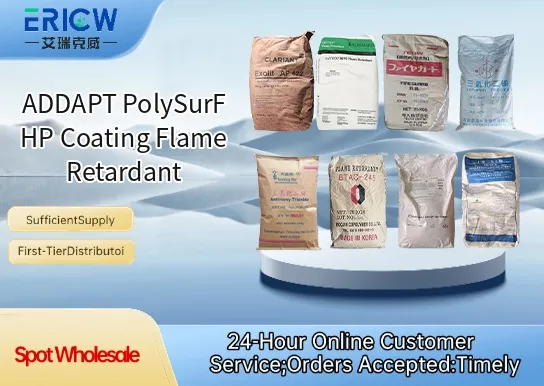
Halogen-free, environmentally compliant flame retardancy meeting stringent RoHS and REACH requirements.
High-performance intumescent formulation that expands upon heat exposure to form a durable, insulating char barrier.
Excellent adhesion to diverse substrates including plastics, coated metals, and fiber-reinforced composites.
Low volatility and thermal stability up to 250 °C, ensuring processing safety and long-term performance retention.
Water-based, low-VOC dispersion enabling sustainable application via spray, dip, or roll-coating methods.
Interior automotive components such as dashboards, door panels, and seat backs.
Electronics enclosures and housings for consumer devices and industrial control units.
Architectural interior panels and decorative laminates in commercial buildings.
Aerospace cabin interior parts including overhead bins and sidewall liners.
Fire-rated signage and wayfinding systems requiring UL 94 V-0 or EN 13501-1 B-s2,d0 classification.
| Chemical Type | Intumescent, phosphorus-nitrogen synergistic system |
| Product Form | Water-based aqueous dispersion |
| Appearance | Opaque white to off-white liquid |
| Primary Applications | Surface-applied flame-retardant coating for thermoplastics and composites |
| Key Features | Halogen-free, low smoke, non-corrosive, UL-listed formulation |
| Benefits | Enables compliance with UL 94 V-0, EN 13501-1, and ASTM E84 Class A |
| Storage Stability | 12 months at 5–30 °C in unopened original container |
| Solids Content | 38–42 wt% (by gravimetric analysis) |
Q1: What types of coating systems is ADDAPT PolySurF HP compatible with?
A: ADDAPT PolySurF HP is engineered for compatibility with waterborne and solvent-based acrylic, polyurethane, epoxy, and alkyd coatings. It disperses readily during standard high-shear mixing and maintains stability across a broad pH range typical of architectural, industrial, and protective coating formulations.
Q2: How does ADDAPT PolySurF HP achieve flame retardancy without compromising film integrity?
A: It functions through an intumescent mechanism—expanding upon exposure to heat to form a thermally insulating char layer that shields the underlying substrate. Its polymeric structure ensures strong interfacial adhesion within the coating matrix, minimizing leaching and preserving mechanical properties such as flexibility and adhesion after curing.
Q3: Is ADDAPT PolySurF HP suitable for interior decorative coatings requiring low VOC and odor compliance?
A: Yes—it is non-halogenated, free of antimony trioxide, and contains no volatile organic solvents or plasticizers. Its formulation supports low-VOC and low-odor coating systems compliant with major indoor air quality guidelines for residential and commercial applications.
Q4: What is the recommended dosage range for effective flame retardancy in standard coating formulations?
A: Dosage depends on the base resin system, film thickness, and target fire performance (e.g., UL 94, ASTM E84 Class A/B). It is typically used at low concentrations—generally ranging from 0.1% to 2% by weight of total formulation—and optimized via small-scale fire testing and rheological evaluation.
Contact With Us:
E-mail: wangxingqiang@ericwchem.com
Have a Questions? Call Us:
Add:
Building A1, Jiete Industrial Park, Huangpu District, Guangzhou City, Guangdong Province, China