English
 Español
 tiếng việt
 русский
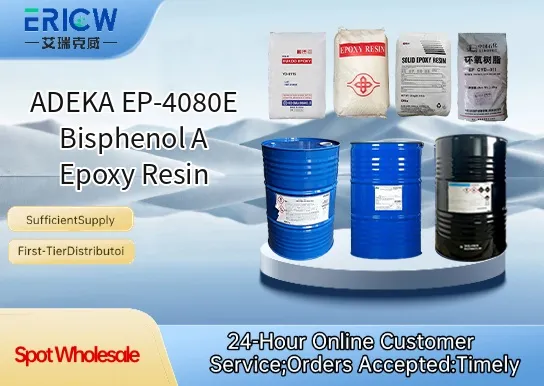
High epoxy equivalent weight (EEW) for controlled crosslink density and reduced exotherm in thick-section casting.
Excellent hydrolytic stability, enhancing long-term performance in humid or outdoor environments.
Low ionic chloride content (< 500 ppm), minimizing corrosion risk in metal-reinforced composites and electronic encapsulants.
Optimized viscosity (12,000–16,000 mPa·s at 25°C) for improved filler loading and processability in high-solids formulations.
Consistent batch-to-batch reproducibility, meeting stringent quality requirements for aerospace and industrial coatings.
High-performance electrical potting and encapsulation compounds for power electronics and EV components.
Structural adhesives requiring thermal stability and low shrinkage during cure.
Heavy-duty protective coatings for offshore platforms and chemical processing equipment.
Reinforced polymer composites in wind turbine blade root joints and mining equipment parts.
High-gloss, UV-resistant industrial floor coatings with enhanced abrasion resistance.
| Chemical Type | Bisphenol A-based liquid epoxy resin |
| Product Form | Clear to pale yellow viscous liquid |
| Appearance | Homogeneous, transparent, free of gels and suspended matter |
| Epoxy Equivalent Weight (EEW) | 4,700–4,900 g/eq |
| Viscosity (25°C) | 12,000–16,000 mPa·s |
| Chloride Content (as Cl⁻) | ≤ 500 ppm |
| Softening Point | Not applicable (liquid at room temperature) |
| Primary Applications | Potting, encapsulation, structural adhesives, protective coatings, composite matrices |
Q1: What is the primary functional role of EP-4080E in epoxy formulations?
A: EP-4080E functions as a reactive diluent and viscosity modifier, enabling improved processability while maintaining crosslink density and thermal stability in cured systems.
Q2: Is EP-4080E compatible with standard amine-based hardeners?
A: Yes — EP-4080E exhibits good reactivity with common aliphatic and aromatic amines, as well as anhydride curing agents, and integrates smoothly into conventional epoxy curing protocols.
Q3: How does EP-4080E compare to non-reactive diluents in terms of performance impact?
A: Unlike non-reactive diluents, EP-4080E participates in the cure reaction, helping preserve mechanical strength, chemical resistance, and glass transition temperature (Tg) in the final network.
Q4: Can EP-4080E be used in high-performance coatings requiring low VOC content?
A: Yes — as a low-volatility, reactive component, EP-4080E supports formulating high-solids and solvent-reduced epoxy coatings without compromising film integrity or cure efficiency.
Q5: What handling precautions are recommended for EP-4080E?
A: Standard industrial hygiene practices apply: use appropriate PPE (gloves, eye protection), ensure adequate ventilation during handling, and avoid prolonged or repeated skin contact due to its potential sensitizing properties.
Contact With Us:
E-mail: wangxingqiang@ericwchem.com
Have a Questions? Call Us:
Add:
Building A1, Jiete Industrial Park, Huangpu District, Guangzhou City, Guangdong Province, China