English
 Español
 tiếng việt
 русский
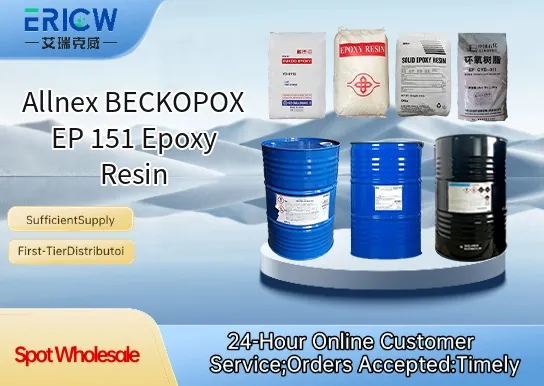
Highly reactive liquid bisphenol-A based epoxy resin with low viscosity for excellent processability.
Optimized molecular weight distribution ensuring consistent reactivity and predictable cure kinetics.
Low chlorine content supporting compliance with stringent regulatory requirements for coatings and adhesives.
Excellent compatibility with common amine, anhydride, and phenolic curing agents.
Superior adhesion to metals, composites, and concrete substrates in demanding industrial environments.
High-performance protective coatings for offshore and marine infrastructure.
Electrical encapsulation and potting compounds for power electronics and transformers.
Structural adhesives in aerospace and automotive composite bonding.
Wind turbine blade matrix resins and repair systems.
Industrial flooring systems requiring chemical resistance and mechanical durability.
| Chemical Type | Bisphenol-A epoxy resin |
| Product Form | Clear, low-viscosity liquid |
| Appearance | Pale yellow to water-white, transparent |
| Epoxy Equivalent Weight (EEW) | 183–190 g/eq |
| Viscosity at 25°C | 11,000–14,000 mPa·s |
| Chlorine Content | ≤ 700 ppm |
| Softening Point | Not applicable (liquid at room temperature) |
| Primary Applications | Coatings, adhesives, composites, electrical encapsulation |
Q1: What is the primary application domain for BECKOPOX EP 151?
A: BECKOPOX EP 151 is a liquid bisphenol-A based epoxy resin primarily designed for high-performance industrial coatings, including can and coil coatings, where excellent adhesion, chemical resistance, and cure efficiency are required.
Q2: How does BECKOPOX EP 151 differ from standard DGEBA resins in terms of reactivity and handling?
A: BECKOPOX EP 151 features a tailored molecular weight distribution and low volatile content, resulting in improved viscosity control and enhanced compatibility with common epoxy hardeners—enabling faster gel times and more consistent film formation without requiring high-temperature curing.
Q3: Is BECKOPOX EP 151 suitable for food-contact compliant coating systems?
A: While BECKOPOX EP 151 itself is not pre-certified for food contact, it has been successfully formulated into coatings that meet applicable global food-contact regulations when combined with appropriate hardeners and processing controls—formulators should validate final system compliance per intended use and regional requirements.
Q4: What types of hardeners are typically compatible with BECKOPOX EP 151?
A: BECKOPOX EP 151 shows good reactivity with conventional amine-based hardeners (e.g., polyamides, aromatic amines) as well as anhydride and phenolic curing agents—selection depends on desired cure profile, flexibility, and end-use performance requirements.
Contact With Us:
E-mail: wangxingqiang@ericwchem.com
Have a Questions? Call Us:
Add:
Building A1, Jiete Industrial Park, Huangpu District, Guangzhou City, Guangdong Province, China