English
 Español
 tiếng việt
 русский
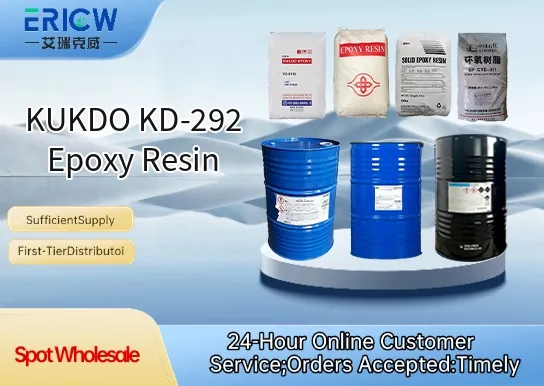
Highly versatile bisphenol-A based liquid epoxy resin with excellent reactivity toward amine and anhydride curing agents.
Low viscosity (10,000–12,000 cP at 25°C) enabling easy handling, mixing, and impregnation into fibrous reinforcements.
Superior mechanical strength and chemical resistance after full cure, particularly against alkalis and solvents.
Consistent batch-to-batch quality with low chloride content (< 500 ppm), ensuring reliability in high-performance composites.
Optimized for ambient and elevated temperature curing systems, supporting flexible processing across manufacturing lines.
Fiber-reinforced polymer (FRP) composites for wind turbine blades and structural profiles.
Electrical laminates and printed circuit board (PCB) prepregs requiring dimensional stability and dielectric integrity.
High-performance adhesives for aerospace and automotive bonding applications.
Protective coatings for industrial flooring, marine structures, and chemical storage tanks.
Potting and encapsulation compounds for electronic components and sensors.
| Chemical Type | Bisphenol-A epoxy resin |
| Product Form | Clear to pale yellow viscous liquid |
| Appearance | Homogeneous, transparent, free of gels or sediment |
| Epoxy Equivalent Weight (EEW) | 185–195 g/eq |
| Viscosity (25°C) | 10,000–12,000 cP |
| Chloride Content | < 500 ppm |
| Softening Point | 12–16°C |
| Volatiles (150°C, 2 hrs) | < 0.3 wt% |
Q1: What is the primary functional role of KD-292 in epoxy formulations?
A: KD-292 is a liquid bisphenol-A based epoxy resin designed primarily as a reactive diluent and viscosity modifier. It helps reduce formulation viscosity without significantly compromising crosslink density or thermal stability, enabling improved processability in casting, potting, and coating applications.
Q2: Is KD-292 suitable for high-gloss, UV-stable coatings?
A: While KD-292 contributes to good film formation and chemical resistance, it is not inherently UV-stable due to its aromatic backbone. For exterior or UV-exposed coating systems, it is typically combined with UV absorbers, HALS stabilizers, or aliphatic co-resins to enhance long-term gloss retention and weather resistance.
Q3: How does KD-292 compare to standard DGEBA resins in terms of reactivity and cure profile?
A: KD-292 exhibits reactivity comparable to conventional liquid DGEBA resins, making it compatible with common amine, anhydride, and phenolic hardeners. Its lower viscosity may slightly accelerate initial wetting and diffusion during cure, but overall gel time and exotherm behavior remain formulation-dependent and require optimization per system.
Q4: Can KD-292 be used in food-contact compliant epoxy systems?
A: KD-292 itself is not pre-approved for food contact. Its suitability depends entirely on final formulation compliance—requiring full migration testing and adherence to applicable regional regulations (e.g., FDA 21 CFR, EU Framework Regulation). Formulators must validate the entire cured system, including hardener and additives, through certified laboratories.
Contact With Us:
E-mail: wangxingqiang@ericwchem.com
Have a Questions? Call Us:
Add:
Building A1, Jiete Industrial Park, Huangpu District, Guangzhou City, Guangdong Province, China