English
 Español
 tiếng việt
 русский
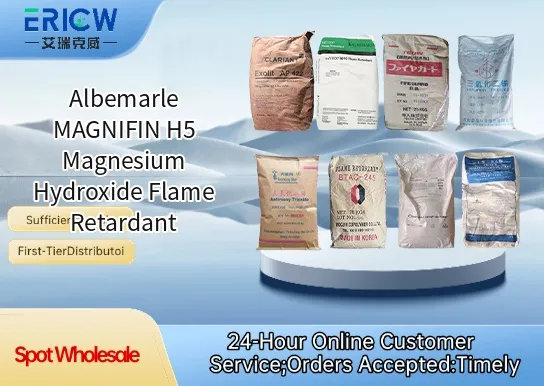
High-purity magnesium hydroxide with low chloride and sulfate impurities for enhanced polymer compatibility.
Optimized particle size distribution to support excellent dispersion in thermoplastics and elastomers.
Halogen-free, non-toxic flame retardant that decomposes endothermically to release water vapor, suppressing combustion.
Low abrasivity minimizes wear on processing equipment during compounding and extrusion.
Thermally stable up to ~340 °C, enabling use in high-melt-index polyolefins and engineering resins.
Flame-retarded polypropylene (PP) for automotive interior components.
Low-smoke, halogen-free cable jacketing and insulation compounds.
Fire-safe thermoplastic elastomers (TPEs) used in consumer electronics housings.
Flame-retardant masterbatches for wire & cable, construction membranes, and transportation materials.
Environmentally compliant flame retardancy in polyethylene (PE) pipes and geomembranes.
| Chemical Type | Magnesium hydroxide, Mg(OH)₂ |
| Product Form | Free-flowing white powder |
| Appearance | White, odorless, fine particulate solid |
| Primary Applications | Halogen-free flame retardant in polyolefins, elastomers, and thermoplastics |
| Key Features | Endothermic decomposition, smoke suppression, acid gas neutralization |
| Benefits | Improved UL94 V-0/V-1 performance, reduced corrosion, RoHS/REACH compliant |
| Bulk Density | ~0.4–0.6 g/cm³ (loose) |
| pH (10% aqueous suspension) | ~10.0–10.5 |
Q1: What distinguishes MAGNIFIN H5 from other magnesium hydroxide flame retardants?
A: MAGNIFIN H5 is a surface-treated, ultra-fine magnesium hydroxide grade engineered for enhanced dispersion and compatibility in demanding polymer systems—particularly in low-smoke, halogen-free cable compounds and thermoplastic elastomers where processing stability and surface finish are critical.
Q2: Is MAGNIFIN H5 suitable for use in polyolefin-based cable jacketing formulations?
A: Yes—MAGNIFIN H5 is widely used in polyolefin systems such as HDPE, LDPE, and EVA, especially where high loading levels are required to meet flame-retardant performance standards while maintaining mechanical integrity and extrusion efficiency.
Q3: How does the surface treatment of MAGNIFIN H5 improve its performance in polymer processing?
A: The proprietary surface treatment reduces particle agglomeration, improves interfacial adhesion with the polymer matrix, and supports more uniform filler distribution—leading to better melt flow, reduced die buildup, and improved tensile and elongation properties in the final compound.
Q4: Can MAGNIFIN H5 be combined with other flame retardants or synergists?
A: Yes—MAGNIFIN H5 is frequently formulated alongside aluminum trihydrate (ATH) or phosphorus-based synergists to achieve balanced flame retardancy, smoke suppression, and thermal stability—especially in applications requiring UL 94 V-0 or IEC 60332-3 compliance.
Q5: What handling precautions should be observed during storage and processing?
A: Store in a cool, dry environment protected from moisture and direct sunlight. During processing, ensure adequate ventilation and dust control measures—as with all fine mineral powders—to maintain workplace safety and prevent airborne particulate exposure.
Contact With Us:
E-mail: wangxingqiang@ericwchem.com
Have a Questions? Call Us:
Add:
Building A1, Jiete Industrial Park, Huangpu District, Guangzhou City, Guangdong Province, China