English
 Español
 tiếng việt
 русский
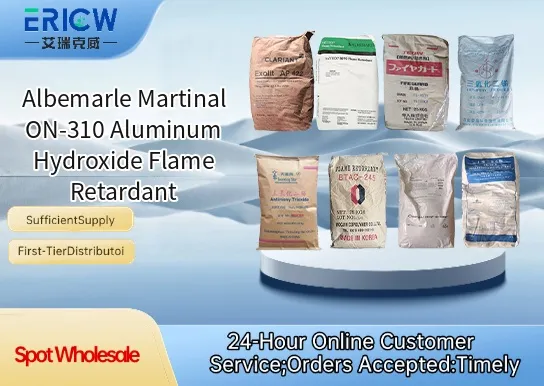
High-purity, surface-treated aluminum hydroxide offering excellent flame retardancy and smoke suppression.
Optimized particle size distribution for improved dispersion in polymer matrices and enhanced mechanical properties.
Thermally stable up to ~200 °C, enabling processing in common thermoplastics and thermosets without premature decomposition.
Halogen-free formulation supporting compliance with RoHS, REACH, and other global environmental and safety regulations.
Low abrasivity minimizes wear on extrusion and molding equipment during high-loading compounding.
Flame-retarded polyolefins (e.g., PP, PE) for wire & cable jacketing and automotive interior components.
Low-smoke, zero-halogen (LSZH) compounds used in building & construction cables and conduit systems.
Flame-retardant thermoset resins including unsaturated polyesters and vinyl esters for marine and transportation composites.
Fire-safe elastomers and rubber compounds for transit seating, flooring, and sealing applications.
Engineering thermoplastics such as polyamide (PA6/PA66) and thermoplastic polyurethane (TPU) requiring UL 94 V-0 rating.
| Chemical Type | Aluminum hydroxide, Al(OH)₃ |
| Product Form | Free-flowing white powder |
| Appearance | White, odorless, non-toxic powder |
| Primary Applications | Halogen-free flame retardant for polymers and elastomers |
| Key Features | Surface-treated, controlled particle size, low moisture content |
| Decomposition Onset Temperature | ~180–200 °C (TGA, 10 °C/min, air) |
| Loss on Ignition (LOI), 1000 °C | ~34.5–35.5 wt% |
| pH (10% aqueous slurry) | 7.5–8.5 |
Q1: What makes Martinal ON-310 different from other aluminum hydroxide flame retardants?
A: Martinal ON-310 is a surface-treated, ultrafine aluminum hydroxide specifically engineered for enhanced dispersion and compatibility in demanding polymer systems, particularly low-viscosity or high-clarity formulations where conventional grades may cause agglomeration or haze.
Q2: In which polymer matrices is Martinal ON-310 most commonly used?
A: It is widely selected for halogen-free flame retardancy in engineering thermoplastics such as polypropylene, polyethylene, and thermoplastic elastomers, especially where improved processability, surface finish, or mechanical property retention are critical.
Q3: How does Martinal ON-310 contribute to flame retardancy without compromising material properties?
A: Upon heating, it undergoes endothermic decomposition, releasing water vapor that cools the substrate and dilutes flammable gases—while its optimized particle morphology and surface treatment help maintain tensile strength, impact resistance, and melt flow stability at typical loading levels.
Q4: Is Martinal ON-310 suitable for applications requiring regulatory compliance with RoHS or REACH?
A: Yes—Martinal ON-310 is an inorganic, halogen-free compound composed solely of aluminum, oxygen, and hydrogen. It contains no substances of very high concern (SVHCs) listed under current REACH candidate lists and meets RoHS Directive requirements for restricted substances.
Q5: What handling precautions should be observed during processing?
A: As with all fine powders, appropriate dust control measures—including local exhaust ventilation and respiratory protection during manual handling—are recommended to minimize inhalation exposure. The material is non-toxic and non-hazardous under normal storage and processing conditions.
Contact With Us:
E-mail: wangxingqiang@ericwchem.com
Have a Questions? Call Us:
Add:
Building A1, Jiete Industrial Park, Huangpu District, Guangzhou City, Guangdong Province, China