English
 Español
 tiếng việt
 русский
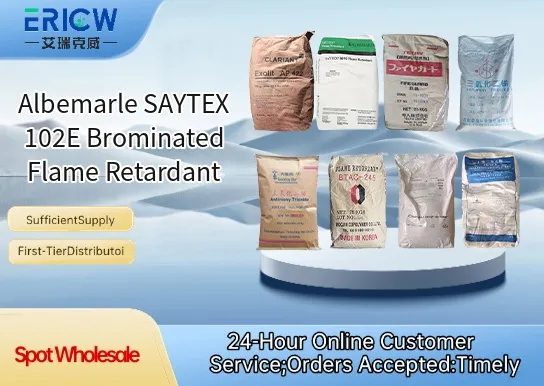
High bromine content (≥78% w/w) ensures efficient flame inhibition in polymer matrices.
Excellent thermal stability, supporting processing temperatures up to 220 °C without significant decomposition.
Good compatibility with engineering thermoplastics including ABS, HIPS, and PC/ABS blends.
Low volatility and minimal plate-out tendency during extrusion and injection molding.
UL 94 V-0 rated performance at optimized loading levels in standard test configurations.
Electrical and electronic housings requiring UL 94 V-0 compliance.
Computer and peripheral components, including keyboards, monitors, and power supplies.
Automotive interior parts such as dashboard trim, control panels, and connector housings.
Business equipment enclosures for printers, copiers, and scanners.
Consumer appliance casings where balanced flame retardancy and mechanical properties are critical.
| Chemical Type | Tribromophenyl allyl ether-based brominated aromatic compound |
| Product Form | Free-flowing off-white to light tan granules |
| Appearance | Granular, non-dusting, uniform particle size distribution |
| Bromine Content | ≥78.0% (w/w), by XRF analysis |
| Decomposition Onset Temperature | ≥220 °C (by TGA, 10 °C/min, N₂ atmosphere) |
| Melt Point Range | 110–125 °C (by DSC) |
| Primary Applications | Flame retardant for ABS, HIPS, and PC/ABS blends |
| Key Features | High efficiency, low volatility, good polymer compatibility |
Q1: What is the primary chemical composition and functional form of SAYTEX 102E?
A: SAYTEX 102E is a brominated aromatic compound formulated as a solid, free-flowing powder. It functions as a reactive flame retardant, designed to chemically bond into polymer backbones—particularly in unsaturated polyesters and vinyl ester resins—providing durable, non-migrating flame resistance.
Q2: In which resin systems is SAYTEX 102E most commonly used, and how does it affect processing?
A: SAYTEX 102E is widely employed in unsaturated polyester (UPE) and vinyl ester resins for composites, especially in transportation and building applications requiring UL 94 V-0 or HB ratings. It exhibits good compatibility and minimal impact on gel time or viscosity when properly dispersed, supporting standard impregnation and molding processes.
Q3: How does SAYTEX 102E compare to additive brominated flame retardants in terms of performance and regulatory considerations?
A: As a reactive flame retardant, SAYTEX 102E offers superior permanence and reduced leaching risk compared to additive types. Its covalent integration into the polymer matrix supports compliance with evolving environmental and health requirements where low volatility and minimal migration are priorities—though final regulatory suitability depends on the full formulation and end-use application.
Q4: What safety and handling precautions should be observed during industrial use?
A: Standard industrial hygiene practices apply: avoid inhalation of dust, use local exhaust ventilation, and wear appropriate PPE—including gloves and safety goggles. The material is not classified as acutely toxic but should be handled in accordance with its Safety Data Sheet (SDS), with particular attention to minimizing airborne particulates during charging and mixing operations.
Contact With Us:
E-mail: wangxingqiang@ericwchem.com
Have a Questions? Call Us:
Add:
Building A1, Jiete Industrial Park, Huangpu District, Guangzhou City, Guangdong Province, China