English
 Español
 tiếng việt
 русский
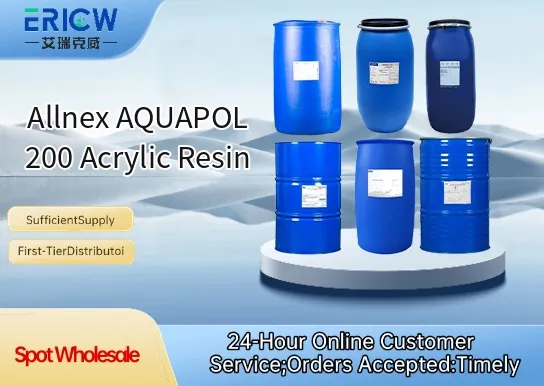
Waterborne acrylic dispersion offering excellent film formation at ambient temperature.
Low VOC formulation compliant with stringent global environmental regulations.
Good compatibility with common coalescents and water-based additives.
Provides balanced hardness, flexibility, and scrub resistance in dried films.
Stable in pH range of 7.5–9.0, ensuring robust storage and formulation shelf life.
Interior architectural wall paints and primers.
Low-odor, eco-friendly decorative coatings for residential and commercial use.
Water-based wood stains and clear finishes for interior substrates.
Basecoats in hybrid waterborne industrial maintenance coatings.
| Chemical Type | Acrylic copolymer dispersion |
| Product Form | White to slightly bluish translucent liquid |
| Appearance | Homogeneous aqueous dispersion |
| Solids Content (wt %) | 48.0 ± 1.0% |
| pH (at 25°C) | 8.2 ± 0.3 |
| Viscosity (mPa·s, Brookfield RVT, #2 spindle, 20 rpm) | 150–400 |
| Minimum Film Formation Temperature (MFFT) | ≈ 12°C |
| Primary Applications | Architectural coatings, interior wood finishes, low-VOC decorative systems |
Q1: What is the primary function of AQUAPOL 200 in waterborne coatings formulations?
A: AQUAPOL 200 functions as a reactive associative thickener and rheology modifier, helping to stabilize latex particles, improve viscosity build, and enhance shear-thinning behavior—particularly in low-VOC, high-solids architectural and industrial waterborne coatings.
Q2: Is AQUAPOL 200 compatible with common co-binders such as styrene-acrylic or vinyl acetate copolymers?
A: Yes, AQUAPOL 200 demonstrates broad compatibility with standard waterborne polymer dispersions, including styrene-acrylic, pure acrylic, and vinyl acetate-based systems, supporting stable formulation across diverse binder chemistries without significant risk of coagulation or viscosity instability.
Q3: How should AQUAPOL 200 be incorporated into a formulation to ensure optimal performance?
A: It is typically added during the let-down stage under moderate agitation, after the main binder and pigments have been dispersed. Premixing with a portion of formulation water or co-solvent prior to addition can aid uniform distribution and minimize localized overdosing.
Q4: Does AQUAPOL 200 contribute to film formation or affect final film properties?
A: As a non-film-forming additive, AQUAPOL 200 remains largely non-volatile and does not coalesce into the final film. It may slightly influence gloss and scrub resistance depending on dosage and system composition, but its primary impact is on application rheology rather than film integrity.
Q5: Can AQUAPOL 200 be used in low-odor or zero-VOC interior paint systems?
A: Yes—AQUAPOL 200 is formulated without APEOs, formaldehyde donors, or volatile organic solvents, making it suitable for low-odor and zero-VOC compliant interior coating systems when used in conjunction with other compliant raw materials.
Contact With Us:
E-mail: wangxingqiang@ericwchem.com
Have a Questions? Call Us:
Add:
Building A1, Jiete Industrial Park, Huangpu District, Guangzhou City, Guangdong Province, China