English
 Español
 tiếng việt
 русский
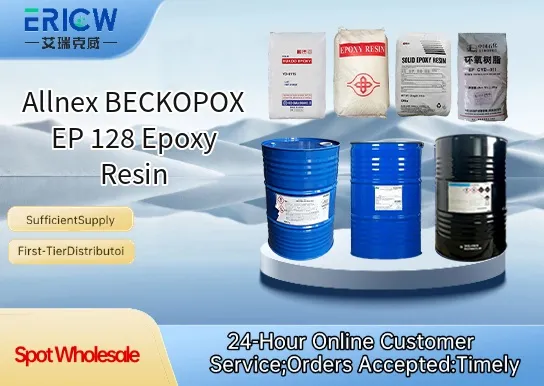
High-purity bisphenol-A based liquid epoxy resin with low chlorine content.
Excellent compatibility with amine and anhydride curing agents for broad formulation flexibility.
Consistent reactivity and low viscosity enabling easy processing and improved wetting of substrates.
Superior electrical insulation properties suitable for demanding electronic encapsulation applications.
Good thermal stability and mechanical strength retention after full cure.
Electrical and electronic encapsulants and potting compounds.
High-voltage insulating varnishes and impregnating resins.
Structural adhesives requiring high bond strength and chemical resistance.
Composite matrix resins for aerospace and industrial laminates.
Coatings for metal substrates in corrosion-resistant industrial systems.
| Chemical Type | Bisphenol-A epoxy resin |
| Product Form | Clear, low-viscosity liquid |
| Appearance | Colorless to pale yellow, transparent |
| Epoxy Equivalent Weight (EEW) | 185–192 g/eq |
| Viscosity at 25°C | 12,000–16,000 mPa·s |
| Chloride Content | ≤ 1,000 ppm |
| Softening Point | 12–16°C |
| Primary Applications | Encapsulation, electrical insulation, structural adhesives |
Q1: What is the primary application area for BECKOPOX EP 128?
A: BECKOPOX EP 128 is a liquid bisphenol-A based epoxy resin designed primarily for high-performance industrial coatings, including can and coil coatings, where excellent adhesion, chemical resistance, and cure efficiency are required.
Q2: How does BECKOPOX EP 128 differ from standard DGEBA resins in terms of reactivity and handling?
A: BECKOPOX EP 128 offers enhanced reactivity compared to conventional liquid DGEBA resins due to its tailored molecular weight distribution and low volatile content, enabling faster crosslinking with common curing agents while maintaining good pot life under typical processing conditions.
Q3: Is BECKOPOX EP 128 suitable for food-contact coating applications?
A: BECKOPOX EP 128 is formulated to support compliance with global food-contact regulations when incorporated into fully cured, compliant coating systems; however, final regulatory approval depends on the complete formulation, cure conditions, and intended use — users must validate suitability with their regulatory team and applicable local requirements.
Q4: Which types of curing agents are commonly used with BECKOPOX EP 128?
A: It is compatible with a broad range of amine-based hardeners (e.g., aromatic and aliphatic amines), anhydrides, and phenolic resins; selection depends on the desired balance of cure speed, film properties, and end-use performance requirements.
Contact With Us:
E-mail: wangxingqiang@ericwchem.com
Have a Questions? Call Us:
Add:
Building A1, Jiete Industrial Park, Huangpu District, Guangzhou City, Guangdong Province, China