English
 Español
 tiếng việt
 русский
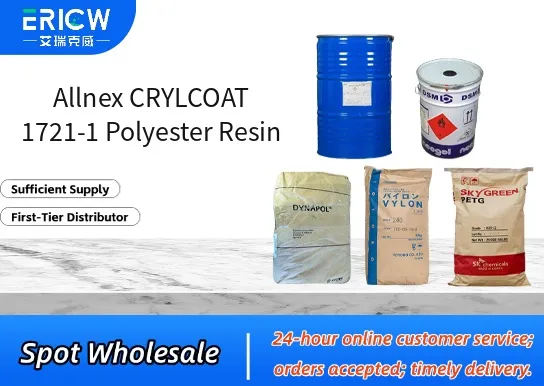
High-gloss, durable finish with excellent flow and leveling characteristics.
Optimized for low-cure temperature powder coating systems (160–180 °C).
Outstanding weather resistance and UV stability for outdoor applications.
Good mechanical properties including impact resistance and flexibility.
Compatible with standard TGIC and TGIC-free curing agents for broad formulation flexibility.
Architectural aluminum extrusions for façades and window frames.
Outdoor furniture and garden equipment coatings.
Agricultural and construction machinery components.
Street lighting fixtures and traffic infrastructure elements.
Consumer appliances requiring high aesthetic and durability performance.
| Chemical Type | Carboxyl-functional saturated polyester |
| Product Form | Free-flowing white to off-white granules |
| Appearance | Homogeneous granular solid |
| Acid Value (mg KOH/g) | 34–38 |
| Melt Viscosity (Pa·s at 200 °C) | 3,500–4,500 |
| Glass Transition Temperature (°C) | 68–72 |
| Primary Applications | Exterior-grade thermosetting powder coatings |
| Key Features | Low-cure capability, high gloss retention, UV resistance |
Q1: What is the primary application of CRYLCOAT 1721-1 in powder coating systems?
A: CRYLCOAT 1721-1 is a carboxyl-functional polyester resin specifically designed for use in TGIC-free, high-gloss, exterior-grade thermosetting powder coatings—particularly where excellent weather resistance, mechanical durability, and smooth film formation are required.
Q2: Which curing agents is CRYLCOAT 1721-1 typically crosslinked with?
A: This resin is formulated to react efficiently with standard epoxy-functional hardeners, including glycidyl ester-based co-reactants commonly used in TGIC-free powder coating systems. Compatibility with alternative low-TGIC or TGIC-free alternatives should be verified through lab-scale formulation testing.
Q3: How does CRYLCOAT 1721-1 perform under UV exposure and outdoor weathering conditions?
A: As a high-purity, aromatic-aliphatic polyester, CRYLCOAT 1721-1 delivers robust resistance to UV degradation and long-term chalking, making it suitable for architectural and industrial applications exposed to demanding outdoor environments.
Q4: Is CRYLCOAT 1721-1 compatible with common flow and leveling additives used in powder coatings?
A: Yes—CRYLCOAT 1721-1 demonstrates good compatibility with widely used acrylic and silicone-based flow modifiers, as well as benzoin and other degassing agents. Optimal additive selection and dosage depend on the specific formulation matrix and target performance criteria.
Contact With Us:
E-mail: wangxingqiang@ericwchem.com
Have a Questions? Call Us:
Add:
Building A1, Jiete Industrial Park, Huangpu District, Guangzhou City, Guangdong Province, China