English
 Español
 tiếng việt
 русский
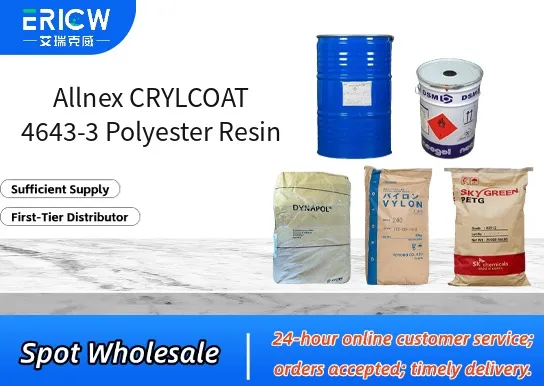
High-gloss, excellent flow and leveling for premium surface aesthetics.
Outstanding weather resistance and UV stability for long-term outdoor performance.
Good chemical resistance to solvents, cleaning agents, and mild acids.
Compatible with standard TGIC and hydroxyalkylamide (HAA) curing agents.
Consistent batch-to-batch reproducibility and low volatile organic content (VOC).
Architectural aluminum extrusions for façades and window systems.
Automotive exterior trim and non-under-hood decorative components.
Outdoor furniture and garden equipment coatings.
Industrial metal furniture and office equipment finishes.
Electrical enclosures and streetlight housings requiring durable color retention.
| Chemical Type | Carboxyl-functional saturated polyester |
| Product Form | Powdered solid resin |
| Appearance | Free-flowing white to off-white granules |
| Acid Value (mg KOH/g) | 27–33 |
| Number Average Molecular Weight (Mn) | ~2,800–3,200 g/mol |
| Glass Transition Temperature (Tg) | 68–72 °C |
| Primary Applications | Exterior-grade thermosetting powder coatings |
| Key Features | Weather durability, high gloss, smooth film formation |
Q1: What is the primary application of CRYLCOAT 4643-3 in powder coatings?
A: CRYLCOAT 4643-3 is a carboxyl-functional polyester resin designed for use in TGIC-free and HAA-cured thermosetting powder coating systems, particularly where high gloss, excellent flow, and good mechanical properties are required — commonly applied in architectural, general industrial, and appliance finishes.
Q2: Is CRYLCOAT 4643-3 compatible with both TGIC-free and TGIC-based curing agents?
A: CRYLCOAT 4643-3 is specifically optimized for TGIC-free curing systems using hydroxyalkyl amide (HAA) crosslinkers. While it may react with TGIC under certain conditions, its formulation and performance profile are engineered for HAA compatibility — including balanced reactivity, storage stability, and cure response at standard powder coating bake schedules.
Q3: How does CRYLCOAT 4643-3 contribute to film appearance and surface quality?
A: This resin delivers exceptional melt viscosity control and low melt elasticity, supporting superior leveling and high-gloss development. It also contributes to reduced orange peel and improved substrate coverage, especially in complex geometries, due to its well-balanced molecular weight distribution and functional group uniformity.
Q4: What are key handling and storage recommendations for this resin?
A: Store in a cool, dry place away from direct sunlight and moisture. Keep containers tightly sealed to prevent moisture absorption, which may affect flow behavior and gel time during extrusion. Avoid prolonged exposure to elevated ambient temperatures prior to processing, as this could impact storage stability and initial fusion characteristics.
Contact With Us:
E-mail: wangxingqiang@ericwchem.com
Have a Questions? Call Us:
Add:
Building A1, Jiete Industrial Park, Huangpu District, Guangzhou City, Guangdong Province, China