English
 Español
 tiếng việt
 русский
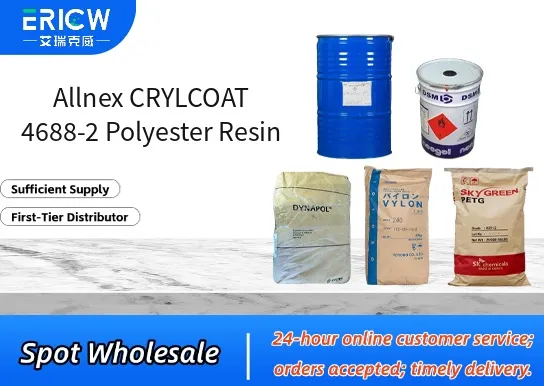
High-gloss, excellent flow and leveling for premium surface aesthetics.
Outstanding weather resistance and UV stability for long-term outdoor performance.
Excellent chemical resistance to solvents, cleaning agents, and mild acids.
Good compatibility with standard TGIC and hydroxyalkylamide (HAA) curing agents.
Consistent batch-to-batch reproducibility and low volatile organic content (VOC).
Architectural aluminum extrusions for façades and curtain walls.
Automotive exterior trim and non-structural components.
Outdoor furniture and garden equipment coatings.
Industrial metal enclosures and electrical housings.
General-purpose coil and powder coating systems requiring durability and gloss retention.
| Chemical Type | Carboxyl-functional saturated polyester |
| Product Form | Free-flowing white to off-white granular solid |
| Appearance | Granular, free of lumps and foreign particles |
| Acid Value (mg KOH/g) | 27–33 |
| Gardner Color | ≤ 2 |
| Melt Viscosity (180 °C, Pa·s) | 25–40 |
| Softening Point (°C, Ring & Ball) | 78–84 |
| Primary Applications | Powder coatings for architectural and industrial metal substrates |
Q1: What is the primary application of CRYLCOAT 4688-2 in powder coatings?
A: CRYLCOAT 4688-2 is a carboxyl-functional polyester resin designed for use as a binder in TGIC-free and HAA-cured architectural and industrial powder coating systems, offering good flow, gloss retention, and weather resistance.
Q2: How does CRYLCOAT 4688-2 compare to standard glycidyl ester-based polyesters in terms of curing reactivity?
A: CRYLCOAT 4688-2 exhibits moderate reactivity with common crosslinkers such as hydroxyalkyl amides (HAA), enabling balanced gel time and full cure at typical powder coating bake schedules (e.g., 180–200 °C for 10–20 minutes), without requiring highly accelerated conditions.
Q3: Is CRYLCOAT 4688-2 suitable for high-gloss, smooth-finish applications?
A: Yes — its well-controlled molecular weight distribution and low melt viscosity support excellent leveling and surface appearance, making it appropriate for medium- to high-gloss decorative finishes where aesthetics and durability are both critical.
Q4: What types of pigments and additives are typically compatible with CRYLCOAT 4688-2?
A: It demonstrates broad compatibility with conventional organic and inorganic pigments, as well as standard powder coating additives including flow agents, degassing agents, and benzoin alternatives — though formulation optimization is recommended to ensure dispersion stability and final film performance.
Contact With Us:
E-mail: wangxingqiang@ericwchem.com
Have a Questions? Call Us:
Add:
Building A1, Jiete Industrial Park, Huangpu District, Guangzhou City, Guangdong Province, China