English
 Español
 tiếng việt
 русский
High-gloss, excellent flow and leveling for premium surface aesthetics.
Outstanding weather resistance and UV stability for long-term outdoor performance.
Good chemical resistance to solvents, cleaning agents, and mild acids.
Optimized reactivity for efficient curing with TGIC-free or low-TGIC powder formulations.
Consistent batch-to-batch reproducibility supporting reliable industrial production.
Architectural aluminum extrusions for façades and curtain walls.
Outdoor furniture and garden equipment coatings.
Automotive exterior trim and non-under-hood components.
Street lighting fixtures and traffic infrastructure elements.
Consumer electronics enclosures requiring durable decorative finishes.
| Chemical Type | Carboxyl-functional saturated polyester |
| Product Form | Free-flowing white to off-white granules |
| Appearance | Homogeneous granular solid |
| Primary Applications | Exterior-grade TGIC-free and low-TGIC thermoset powder coatings |
| Key Features | High gloss, UV resistance, weather durability, good overbake stability |
| Benefits | Reduced formulation complexity, enhanced end-product longevity, compliance-ready |
| Storage Conditions | Store in cool, dry place; protect from moisture and direct sunlight |
| Shelf Life | 12 months from date of manufacture under recommended conditions |
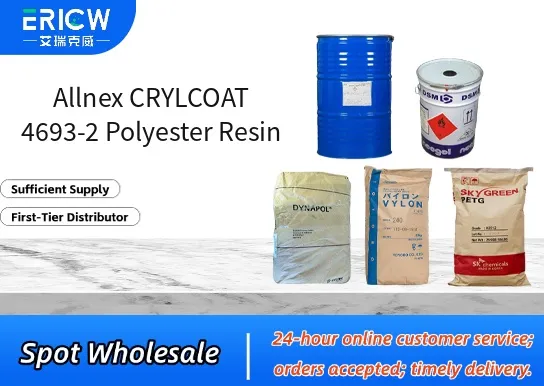
Q1: What is the primary application of CRYLCOAT 4693-2 in powder coatings?
A: CRYLCOAT 4693-2 is a carboxyl-functional polyester resin specifically designed for use in TGIC-free, high-gloss, exterior-grade powder coatings—particularly where excellent weather resistance, mechanical durability, and smooth film formation are required.
Q2: Which curing agents is CRYLCOAT 4693-2 typically compatible with?
A: It is formulated to react efficiently with standard epoxy-based crosslinkers such as triglycidyl isocyanurate (TGIC) or alternative non-TGIC systems like β-hydroxyalkylamide (HAA), depending on the desired performance profile and regulatory requirements.
Q3: How does CRYLCOAT 4693-2 contribute to outdoor weatherability?
A: Its molecular structure provides enhanced resistance to UV degradation and chalking, supporting long-term gloss retention and color stability in demanding exterior applications—including architectural aluminum extrusions and façade components.
Q4: What handling precautions should be observed during processing?
A: As with most thermosetting polyester resins, it should be stored in a cool, dry environment and protected from moisture. During extrusion and grinding, standard industrial hygiene practices—including dust control and proper ventilation—are recommended to maintain process consistency and operator safety.
Contact With Us:
E-mail: wangxingqiang@ericwchem.com
Have a Questions? Call Us:
Add:
Building A1, Jiete Industrial Park, Huangpu District, Guangzhou City, Guangdong Province, China