English
 Español
 tiếng việt
 русский
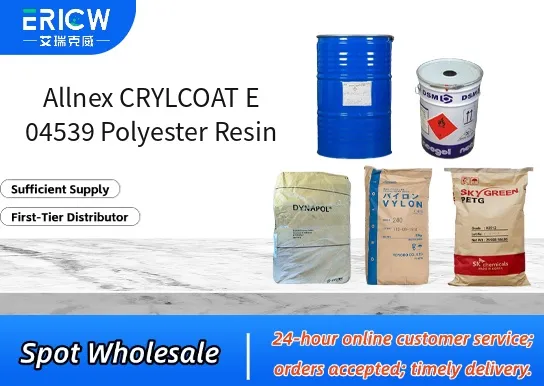
High-gloss, excellent flow and leveling for premium aesthetic finish.
Outstanding weather resistance and UV stability for long-term outdoor performance.
Low curing temperature capability (180–200 °C), enabling energy-efficient powder coating processes.
Good mechanical properties including impact resistance and flexibility on metal substrates.
Compatible with standard triglycidyl isocyanurate (TGIC) and TGIC-free curing agents.
Architectural aluminum extrusions for façades and curtain walls.
Outdoor furniture and garden equipment coatings.
Agricultural and construction machinery components.
Street lighting poles and traffic infrastructure elements.
Consumer appliances requiring durable, decorative finishes.
| Chemical Type | Carboxyl-functional polyester resin |
| Product Form | Free-flowing white to off-white granular solid |
| Appearance | Granular, homogeneous particles |
| Acid Value (mg KOH/g) | 26–30 |
| Gardner Color | ≤ 2 |
| Melt Viscosity (Pa·s at 200 °C) | 40–60 |
| Softening Point (°C, ASTM E28) | 72–78 |
| Primary Applications | Exterior-grade powder coatings for aluminum and steel |
Q1: What is the primary application of CRYLCOAT E 04539 in powder coating systems?
A: CRYLCOAT E 04539 is a carboxyl-functional polyester resin specifically designed for use in TGIC-free, high-performance hybrid powder coatings—particularly where excellent flow, gloss retention, and mechanical durability are required, such as for architectural aluminum extrusions and general industrial metal substrates.
Q2: How does CRYLCOAT E 04539 differ from standard GMA acrylics or pure polyester resins in hybrid formulations?
A: Unlike GMA acrylics, CRYLCOAT E 04539 offers higher crosslink density and improved chemical resistance when reacted with epoxy resins, while maintaining better flexibility and impact performance than many rigid polyester-epoxy hybrids. Its tailored acid value and molecular weight distribution support balanced reactivity and film formation without excessive brittleness.
Q3: Is CRYLCOAT E 04539 suitable for outdoor applications requiring UV stability?
A: Yes—this resin is formulated to provide good long-term weatherability in hybrid systems, especially when combined with appropriate UV-stabilized curing agents and pigments. It demonstrates strong resistance to chalking and gloss loss under accelerated QUV testing, making it well-suited for exterior architectural and façade applications.
Q4: What type of curing agent is typically used with CRYLCOAT E 04539?
A: It is primarily intended for use with solid bisphenol-A based epoxy resins (e.g., EPON™ 1001F-type) in 70/30 to 60/40 polyester/epoxy weight ratios. The system relies on acid–epoxy condensation chemistry, offering low-cure-temperature capability and reduced yellowing versus traditional TGIC systems.
Contact With Us:
E-mail: wangxingqiang@ericwchem.com
Have a Questions? Call Us:
Add:
Building A1, Jiete Industrial Park, Huangpu District, Guangzhou City, Guangdong Province, China