English
 Español
 tiếng việt
 русский
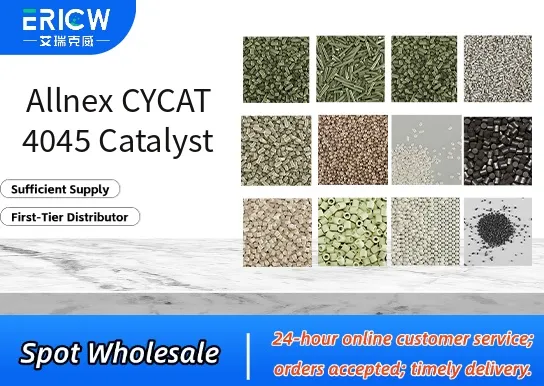
Highly efficient tin-based catalyst for urethane and esterification reactions.
Excellent storage stability with low volatility and minimal odor.
Enables precise reaction control in polyurethane prepolymers and coatings.
Compatible with a broad range of polyols, isocyanates, and acid-functional resins.
Meets stringent regulatory requirements for industrial coating formulations.
Polyurethane elastomers and castable systems.
Automotive OEM and refinish clearcoats.
Industrial maintenance and protective coatings.
Wood and plastic coatings requiring fast cure and low VOC.
Adhesives and sealants based on moisture-curing or thermosetting chemistries.
| Chemical Type | Organotin compound (dibutyltin dilaurate derivative) |
| Product Form | Liquid |
| Appearance | Clear, light yellow to amber liquid |
| Primary Applications | Polyurethane coatings, adhesives, elastomers |
| Key Features | High catalytic activity, thermal stability, low volatility |
| Benefits | Improved pot life control, reduced side reactions, enhanced film formation |
| Storage Conditions | Store in original sealed container at 15–25°C, protect from moisture |
| Regulatory Compliance | REACH registered; not classified as hazardous under GHS (as supplied) |
Q1: What is the primary function of CYCAT 4045 in coating formulations?
A: CYCAT 4045 is a selective acid catalyst designed to accelerate the crosslinking reaction between melamine-formaldehyde resins and hydroxyl-functional binders—such as alkyds, acrylics, or polyesters—without promoting excessive side reactions or premature gelation.
Q2: How does CYCAT 4045 differ from conventional strong acid catalysts like p-toluenesulfonic acid (pTSA)?
A: Unlike highly reactive strong acids, CYCAT 4045 offers improved latency and controlled reactivity, enabling better pot life stability in ambient-cure or low-bake systems while still delivering efficient cure at elevated temperatures. Its tailored acidity profile helps reduce substrate corrosion and improves film appearance.
Q3: Is CYCAT 4045 compatible with waterborne coating systems?
A: Yes, CYCAT 4045 demonstrates good compatibility with many waterborne resin systems, including hydroxy-acrylic dispersions and aqueous polyester emulsions. However, its performance should be verified in the final formulation due to sensitivity to pH, ionic strength, and co-solvent selection.
Q4: What are typical handling and storage recommendations for CYCAT 4045?
A: Store in tightly sealed original containers under cool, dry conditions away from direct sunlight and moisture. Avoid prolonged exposure to high humidity or elevated temperatures, as this may affect catalytic activity over time. Always follow standard industrial hygiene practices when handling.
Contact With Us:
E-mail: wangxingqiang@ericwchem.com
Have a Questions? Call Us:
Add:
Building A1, Jiete Industrial Park, Huangpu District, Guangzhou City, Guangdong Province, China