English
 Español
 tiếng việt
 русский
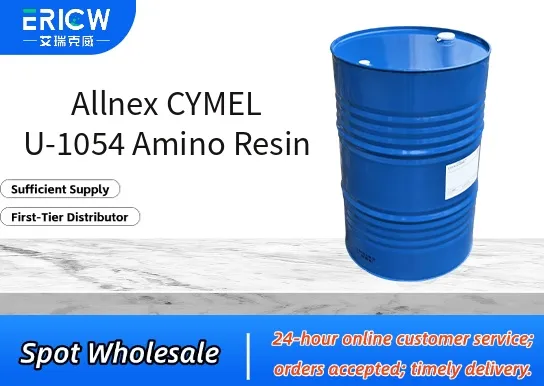
Highly reactive melamine-formaldehyde resin offering excellent cure speed at low baking temperatures.
Superior compatibility with acrylic, polyester, and alkyd resins for broad formulation flexibility.
Delivers outstanding hardness, chemical resistance, and gloss retention in cured coatings.
Low formaldehyde emission profile, supporting compliance with stringent environmental and safety standards.
Excellent storage stability in solvent-based systems without premature self-condensation.
Automotive OEM and refinish topcoats requiring high durability and aesthetic performance.
Industrial coil coatings for metal substrates demanding rapid line speeds and consistent film quality.
Powder coating formulations where low-cure reactivity enhances energy efficiency and substrate compatibility.
General-purpose can and container coatings requiring FDA-compliant food-contact performance (when formulated accordingly).
High-performance appliance and furniture coatings requiring mar resistance and long-term color stability.
| Chemical Type | Melamine-formaldehyde crosslinker |
| Product Form | Liquid |
| Appearance | Clear to slightly hazy, water-white to pale yellow liquid |
| Solvent Content | Approx. 70–75% (isobutanol/butanol blend) |
| Non-Volatile Content | 25–28% (by weight, 105 °C, 30 min) |
| Viscosity (25 °C) | 15–25 mPa·s (Brookfield RV, spindle #1) |
| pH (10% solution in water) | 7.5–8.5 |
| Key Features | Low-bake reactivity, low free formaldehyde, high compatibility |
Q1: What is the primary function of CYMEL U-1054 in coating formulations?
A: CYMEL U-1054 is a highly reactive, low-viscosity melamine-formaldehyde amino resin designed as a crosslinker for thermosetting coatings. It enables rapid cure at moderate temperatures and contributes to excellent hardness, chemical resistance, and gloss retention in final films.
Q2: Which resin systems is CYMEL U-1054 typically compatible with?
A: It exhibits good compatibility with a broad range of hydroxyl-functional resins, including acrylics, alkyds, polyesters, and some epoxy-modified systems. Its low viscosity and high reactivity make it especially suitable for high-solids and low-VOC formulations where efficient crosslinking is required without excessive catalyst loading.
Q3: Does CYMEL U-1054 require an acid catalyst for curing, and if so, what types are recommended?
A: Yes — like most melamine crosslinkers, CYMEL U-1054 benefits from acid catalysis to achieve full cure at practical baking temperatures. Commonly used catalysts include blocked or latent acid types such as p-toluenesulfonic acid (p-TSA) derivatives, dinonylnaphthalene disulfonic acid (DNDSDA), or encapsulated phosphoric acid variants. Catalyst selection should balance pot life, flow, and cure speed based on the specific application.
Q4: How should CYMEL U-1054 be stored to maintain stability and performance?
A: Store in tightly sealed containers under cool, dry conditions, ideally between 10 °C and 25 °C. Avoid prolonged exposure to elevated temperatures or humidity, as this may promote premature condensation or viscosity increase. Once opened, minimize contact with moisture and use within recommended shelf-life guidelines under controlled storage.
Contact With Us:
E-mail: wangxingqiang@ericwchem.com
Have a Questions? Call Us:
Add:
Building A1, Jiete Industrial Park, Huangpu District, Guangzhou City, Guangdong Province, China