English
 Español
 tiếng việt
 русский
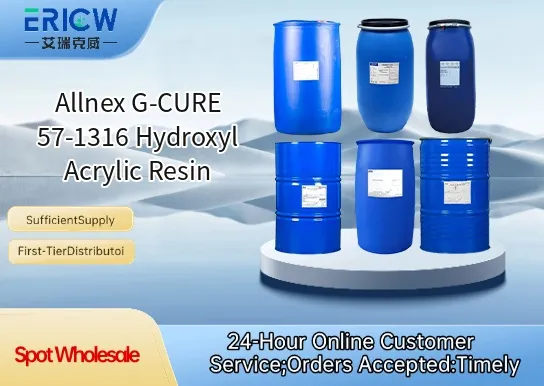
High hydroxyl functionality for robust crosslinking with melamine and polyisocyanate curing agents.
Excellent compatibility with common solvent-based automotive and industrial coating systems.
Provides outstanding gloss retention, hardness development, and chemical resistance in cured films.
Engineered for balanced flow and leveling without sacrificing film build or cure speed.
Consistent batch-to-batch performance supported by rigorous quality control and ISO-certified manufacturing.
Automotive OEM topcoats and clearcoats.
Industrial maintenance coatings for metal substrates.
General-purpose coil coatings requiring high durability and appearance.
Refinish basecoat/clearcoat systems for professional body shops.
High-performance appliance finishes requiring excellent mar and scratch resistance.
| Chemical Type | Hydroxyl-functional acrylic copolymer |
| Product Form | Liquid resin solution |
| Appearance | Clear, pale yellow to light amber liquid |
| Solvent System | Aromatic-free, low-VOC blend (e.g., esters & ketones) |
| Hydroxyl Value (OH#) | 95–105 mg KOH/g |
| Acid Value | < 5 mg KOH/g |
| Non-Volatile Content (NV%) | 55–60% at 120 °C, 30 min |
| Viscosity (DIN 4 mm, 25 °C) | 20–30 s |
Q1: What is the primary function of G-CURE 57-1316 in UV-curable coatings?
A: G-CURE 57-1316 is a hydroxyl-functional acrylic resin designed to serve as a reactive diluent and film-forming binder in hybrid UV-curable systems—particularly those combining UV curing with thermal or moisture-triggered crosslinking. It contributes flexibility, adhesion, and compatibility with multifunctional acrylates and isocyanate-based co-resins.
Q2: Is G-CURE 57-1316 compatible with common UV photoinitiators and other acrylic monomers?
A: Yes, G-CURE 57-1316 demonstrates good compatibility with standard Type I and Type II photoinitiators (e.g., alpha-hydroxy ketones, benzophenone derivatives) and typical reactive diluents such as TMPTA, HDDA, and NVP. Its hydroxyl functionality also enables effective participation in post-UV thermal cure steps when blended with blocked isocyanates.
Q3: How does G-CURE 57-1316 differ from non-hydroxyl acrylic resins used in UV systems?
A: Unlike conventional non-functional acrylic oligomers, G-CURE 57-1316 contains pendant hydroxyl groups that enable dual-cure capability—supporting both radical polymerization under UV light and subsequent thermally activated reactions (e.g., with melamines or blocked isocyanates). This enhances crosslink density, substrate adhesion, and chemical resistance in demanding end uses.
Q4: What types of substrates is G-CURE 57-1316 especially suited for?
A: Due to its balanced polarity and hydroxyl functionality, G-CURE 57-1316 delivers strong adhesion on challenging substrates including plastics (e.g., PP, PET, PC), metals, and treated wood. It is frequently selected for applications requiring high flexibility and impact resistance without sacrificing surface hardness after full cure.
Contact With Us:
E-mail: wangxingqiang@ericwchem.com
Have a Questions? Call Us:
Add:
Building A1, Jiete Industrial Park, Huangpu District, Guangzhou City, Guangdong Province, China