English
 Español
 tiếng việt
 русский
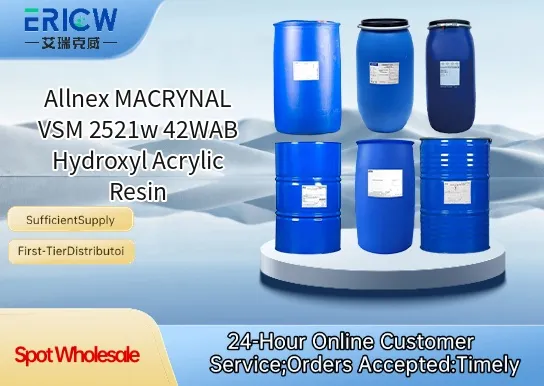
Waterborne hydroxyl-functional acrylic resin designed for high-performance two-component polyurethane coatings.
Excellent compatibility with aliphatic isocyanates and standard waterborne crosslinkers.
Delivers outstanding gloss retention, hardness development, and chemical resistance in cured films.
Low VOC formulation compliant with stringent environmental regulations including EU Directive 2004/42/EC and US EPA guidelines.
Good storage stability and freeze-thaw resistance in aqueous dispersion form.
Architectural wall and ceiling coatings requiring durable, low-VOC finishes.
Industrial maintenance coatings for metal substrates in mild to moderate exposure environments.
Wood coatings for interior furniture and cabinetry where clarity, hardness, and non-yellowing performance are critical.
Plastic coatings for ABS and PC substrates in automotive interior trim and consumer electronics.
| Chemical Type | Hydroxyl-functional acrylic copolymer |
| Product Form | Waterborne dispersion |
| Appearance | Opaque white to slightly bluish liquid |
| Non-Volatile Content (wt%) | 42 ± 1 % |
| pH | 7.5 – 8.5 |
| Hydroxyl Value (mg KOH/g) | 85 – 95 |
| Viscosity (mPa·s, Brookfield RVT, #2 spindle, 20 rpm, 23°C) | 150 – 400 |
| Minimum Film Formation Temperature (MFFT) | ≈ 15 °C |
Q1: What is the primary function of MACRYNAL VSM 2521w 42WAB in coating formulations?
A: It serves as a hydroxyl-functional acrylic resin designed to act as a reactive binder in two-component polyurethane and polyester-based crosslinking systems, contributing to film formation, hardness development, and chemical resistance.
Q2: Is MACRYNAL VSM 2521w 42WAB suitable for waterborne industrial coatings?
A: Yes — it is a water-reducible, low-VOC hydroxyl acrylic resin formulated specifically for high-performance waterborne industrial coatings, including automotive refinish, general metal, and plastic substrates where durability and gloss retention are required.
Q3: Which crosslinkers are commonly compatible with this resin?
A: It is typically paired with aliphatic isocyanate crosslinkers (e.g., HDI-based polyisocyanates) and melamine-formaldehyde resins, depending on cure conditions and performance targets such as flexibility, weatherability, or bake temperature requirements.
Q4: How should MACRYNAL VSM 2521w 42WAB be stored to maintain stability?
A: Store in tightly sealed original containers at temperatures between 5 °C and 30 °C, away from direct sunlight and freezing conditions; prolonged exposure to extreme temperatures or moisture may affect viscosity and reactivity.
Q5: Can this resin be used in low-bake or ambient-cure systems?
A: While optimized for forced-dry or medium-bake conditions (typically 80–140 °C), it can be adapted for ambient-cure applications when combined with highly reactive isocyanate crosslinkers and appropriate catalysts — formulation optimization is recommended.
Contact With Us:
E-mail: wangxingqiang@ericwchem.com
Have a Questions? Call Us:
Add:
Building A1, Jiete Industrial Park, Huangpu District, Guangzhou City, Guangdong Province, China