English
 Español
 tiếng việt
 русский
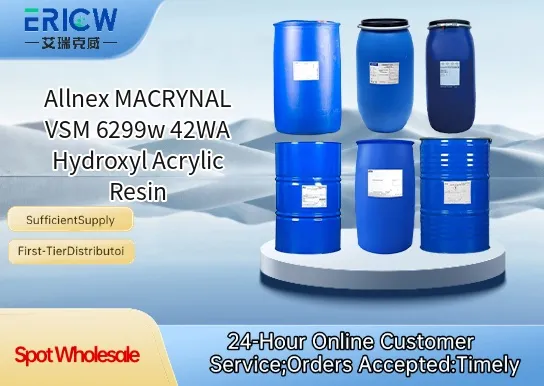
Waterborne hydroxyl-functional acrylic resin designed for high-performance two-component polyurethane coatings.
Offers excellent compatibility with aliphatic isocyanates and good film formation at low coalescent levels.
Delivers outstanding gloss retention, UV resistance, and weatherability in exterior applications.
Provides balanced hardness development and flexibility for durable topcoat performance.
Low VOC formulation supports compliance with stringent environmental regulations including EU Ecolabel and US EPA standards.
Architectural wall coatings requiring long-term color and gloss stability.
Industrial maintenance coatings for metal substrates exposed to outdoor conditions.
High-end automotive refinish clearcoats and basecoat/clearcoat systems.
Plastic coatings for exterior automotive trim and consumer electronics housings.
Wood coatings for premium furniture and cabinetry where clarity and durability are critical.
| Chemical Type | Hydroxyl-functional acrylic copolymer |
| Product Form | Waterborne dispersion |
| Appearance | Clear to slightly hazy liquid |
| Solids Content (wt%) | 42 ± 1% |
| pH | 7.5 – 8.5 |
| Hydroxyl Value (mg KOH/g) | 60 – 70 |
| Viscosity (mPa·s, 23°C, Brookfield LVT, Spindle #1, 6 rpm) | 500 – 1,500 |
| Primary Applications | 2K PU topcoats for architectural, industrial, automotive, and plastic substrates |
Q1: What is the primary function of MACRYNAL VSM 6299w 42WA in coating formulations?
A: MACRYNAL VSM 6299w 42WA serves as a hydroxyl-functional acrylic resin designed to act as a reactive binder in two-component polyurethane and polyester-based coating systems. It contributes to film formation, hardness development, and chemical resistance while maintaining good compatibility with common crosslinkers and solvents.
Q2: Is this resin suitable for waterborne industrial coatings?
A: Yes — VSM 6299w 42WA is specifically formulated as a water-reducible hydroxyl acrylic resin, enabling its use in high-performance waterborne industrial maintenance and OEM coatings where low VOC, good flow, and balanced cure speed are required.
Q3: Which crosslinkers are commonly used with this resin?
A: It exhibits excellent reactivity with standard aliphatic isocyanate crosslinkers (e.g., HDI-based trimer or biuret types) and is also compatible with melamine-formaldehyde resins in certain thermoset applications, depending on catalyst selection and cure conditions.
Q4: How does the “42WA” designation relate to product performance?
A: The “42WA” indicates a waterborne acrylic dispersion with a nominal hydroxyl value targeting compatibility and performance in medium-solids, ambient- to forced-cure waterborne systems. It reflects the resin’s design balance of hydroxyl functionality, molecular weight, and colloidal stability—not a precise analytical specification.
Contact With Us:
E-mail: wangxingqiang@ericwchem.com
Have a Questions? Call Us:
Add:
Building A1, Jiete Industrial Park, Huangpu District, Guangzhou City, Guangdong Province, China