English
 Español
 tiếng việt
 русский
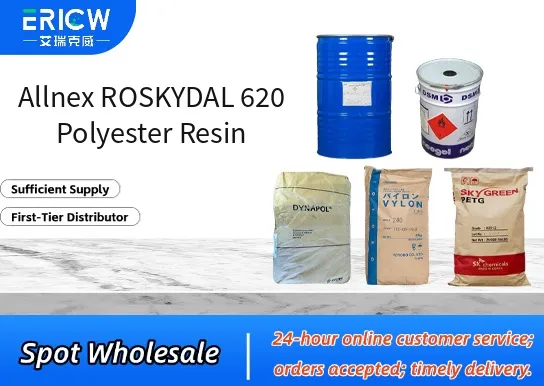
High-solids, low-viscosity unsaturated polyester resin for efficient processing and reduced VOC emissions.
Excellent compatibility with standard styrene monomers and common free-radical initiators.
Superior mechanical strength and dimensional stability in cured laminates.
Good weather resistance and UV stability for outdoor structural applications.
Consistent batch-to-batch reproducibility meeting stringent industrial quality control standards.
Fiberglass-reinforced plastic (FRP) tanks and chemical storage vessels.
Marine hulls, decks, and structural components requiring corrosion resistance.
Transportation panels for buses, railcars, and truck bodies.
Architectural cladding, façade elements, and prefabricated building panels.
Industrial grating, ductwork, and corrosion-resistant process equipment.
| Chemical Type | Unsaturated polyester resin |
| Product Form | Liquid |
| Appearance | Clear to pale yellow, homogeneous liquid |
| Primary Applications | FRP laminating, filament winding, and spray-up processes |
| Key Features | High reactivity, low shrinkage, excellent fiber wet-out |
| Benefits | Improved production efficiency, enhanced surface finish, and long pot life |
| Styrene Content (typ.) | 38–42 wt% |
| Storage Stability | ≥6 months at 25°C in sealed container |
Q1: What is the primary application area for ROSKYDAL 620?
A: ROSKYDAL 620 is a high-solids, low-viscosity unsaturated polyester resin designed primarily for coil coating and industrial maintenance coatings where excellent flow, leveling, and film integrity are required.
Q2: Is ROSKYDAL 620 suitable for UV-curable systems?
A: No — ROSKYDAL 620 is a thermally curable polyester resin and is not formulated for UV curing. It requires conventional thermal crosslinking, typically with melamine-formaldehyde resins or other amino crosslinkers.
Q3: How does ROSKYDAL 620 contribute to film hardness and chemical resistance?
A: Its molecular structure delivers good crosslink density upon cure, supporting enhanced pencil hardness, solvent resistance, and durability in demanding industrial environments — performance that is further optimized when paired with appropriate crosslinkers and catalysts.
Q4: Can ROSKYDAL 620 be used in high-gloss topcoats?
A: Yes — its low inherent viscosity and excellent compatibility with common solvents and crosslinkers support formulation of high-gloss, defect-free films, especially in baked coil and appliance coatings.
Q5: What type of catalysts are recommended for optimal cure with ROSKYDAL 620?
A: Acid catalysts such as p-toluenesulfonic acid (p-TSA) or blocked acid catalysts are commonly used; selection depends on the specific crosslinker system and desired cure schedule — always validate catalyst type and dosage during formulation development.
Contact With Us:
E-mail: wangxingqiang@ericwchem.com
Have a Questions? Call Us:
Add:
Building A1, Jiete Industrial Park, Huangpu District, Guangzhou City, Guangdong Province, China