English
 Español
 tiếng việt
 русский
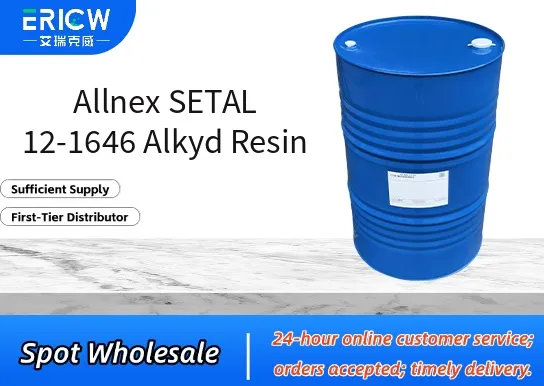
Medium-oil alkyd resin based on phthalic anhydride and soybean oil fatty acids.
Designed for excellent gloss retention and through-dry performance in air-drying systems.
Offers balanced hardness development and flexibility for durable film formation.
Compatible with common solvents, pigments, and co-resins including melamine and urea formaldehydes.
Provides good compatibility with nitrocellulose and acrylic blends for enhanced formulation versatility.
General-purpose industrial maintenance coatings.
Wood finishing varnishes and stains for interior applications.
Metal primers and topcoats requiring ambient cure and moderate chemical resistance.
Decorative architectural paints for metal and wood substrates.
Coating systems for agricultural and construction equipment.
| Chemical Type | Medium-oil modified alkyd resin |
| Product Form | Liquid |
| Appearance | Clear to slightly hazy amber liquid |
| Primary Applications | Industrial maintenance coatings, wood finishes, metal topcoats |
| Key Features | Air-drying, gloss retention, pigment wetting, solvent release |
| Benefits | Good film integrity, balanced drying profile, formulation flexibility |
| Solvent Compatibility | Toluene, xylene, mineral spirits, ester blends |
| Recommended Solids Content | 50–60% w/w in standard solvent blends |
Q1: What is the primary application area for SETAL 12-1646?
A: SETAL 12-1646 is a medium-oil-length alkyd resin designed primarily for solvent-based decorative and protective coatings, including interior/exterior architectural paints, wood finishes, and general-purpose industrial maintenance coatings where balanced drying performance, gloss retention, and film flexibility are required.
Q2: Is SETAL 12-1646 compatible with common co-resins and modifiers?
A: Yes, it exhibits good compatibility with typical coating additives such as acrylic resins, melamine-formaldehyde crosslinkers, and urea-formaldehyde resins. It also blends well with conventional solvents like xylene, mineral spirits, and aromatic hydrocarbon mixtures, supporting formulation flexibility in both air-dry and forced-dry systems.
Q3: How does SETAL 12-1646 perform in terms of drying and film formation?
A: As a cobalt-free, air-drying alkyd, it offers reliable through-dry characteristics under ambient conditions, supported by its optimized fatty acid composition. Film formation yields good hardness development over time while maintaining acceptable flexibility and resistance to cracking—especially when formulated with appropriate driers and solvents.
Q4: Can SETAL 12-1646 be used in low-VOC formulations?
A: Yes—it can be incorporated into lower-VOC systems by adjusting solvent selection and using high-solids-compatible thinners. While not inherently water-reducible, its molecular structure allows for effective VOC reduction strategies without significant compromise to application or film properties, provided formulation adjustments are made accordingly.
Contact With Us:
E-mail: wangxingqiang@ericwchem.com
Have a Questions? Call Us:
Add:
Building A1, Jiete Industrial Park, Huangpu District, Guangzhou City, Guangdong Province, China