English
 Español
 tiếng việt
 русский
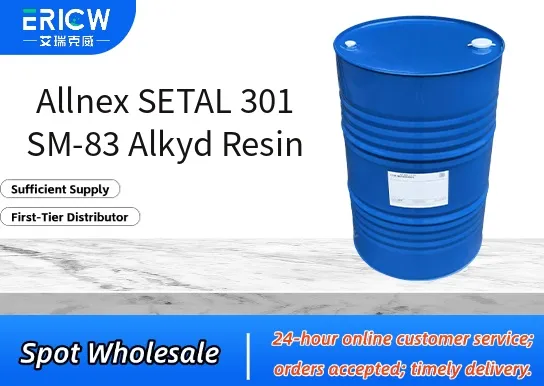
Medium-oil, cobalt-free alkyd resin designed for high-performance air-drying coatings.
Excellent compatibility with nitrocellulose, acrylics, and other common coating resins.
Delivers balanced hardness development and flexibility for durable film formation.
Low VOC formulation support—enables compliance with stringent environmental regulations.
Consistent batch-to-batch reproducibility and reliable storage stability.
Industrial maintenance coatings for metal structures and equipment.
General-purpose decorative enamels for metal furniture and fixtures.
Undercoats and primers requiring good sandability and intercoat adhesion.
Refinish coatings for agricultural and construction machinery.
Wood finishing systems where moderate chemical resistance and gloss retention are required.
| Chemical Type | Medium-oil modified alkyd resin |
| Product Form | Liquid solution in aromatic hydrocarbon solvent |
| Appearance | Clear, pale yellow to amber liquid |
| Primary Applications | Air-drying industrial and decorative coatings |
| Key Features | Cobalt-free, medium drying speed, excellent compatibility |
| Benefits | Reduced heavy metal content, improved regulatory compliance, consistent film performance |
| Solvent Content (approx.) | ~50% w/w |
| Storage Stability | Stable for ≥12 months at 20–25°C in sealed containers |
Q1: What is the primary application field for SETAL 301 SM-83?
A: SETAL 301 SM-83 is a solvent-borne short-oil alkyd resin designed primarily for high-gloss decorative and protective coatings, including interior and exterior architectural paints, wood finishes, and general-purpose industrial maintenance coatings where excellent flow, leveling, and gloss retention are required.
Q2: Is SETAL 301 SM-83 compatible with common crosslinkers used in ambient-cure systems?
A: Yes — it is formulated to be compatible with standard amino resins (e.g., melamine-formaldehyde) and can also be used in oxidative cure systems. It responds well to conventional cobalt- or manganese-based driers when used in air-drying formulations.
Q3: How does SETAL 301 SM-83 perform in terms of yellowing resistance?
A: As a short-oil alkyd based on phthalic anhydride and non-yellowing polyols, it offers improved resistance to yellowing compared to traditional long-oil alkyds — particularly in indoor applications and under low-UV conditions. However, prolonged exposure to UV light or heat may still lead to gradual discoloration.
Q4: Can SETAL 301 SM-83 be blended with acrylic or polyester resins?
A: Yes — it demonstrates good compatibility with many acrylic and polyester resins in solvent-borne systems, enabling hybrid formulations that balance alkyd flexibility and film formation with enhanced weatherability or hardness from the co-resin.
Contact With Us:
E-mail: wangxingqiang@ericwchem.com
Have a Questions? Call Us:
Add:
Building A1, Jiete Industrial Park, Huangpu District, Guangzhou City, Guangdong Province, China