English
 Español
 tiếng việt
 русский
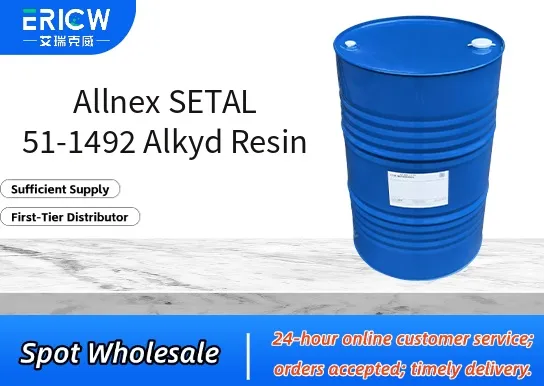
Medium-oil-length alkyd resin based on phthalic anhydride and soybean oil fatty acids.
Designed for excellent through-dry and hardness development in air-drying coatings.
Delivers balanced flexibility, gloss retention, and yellowing resistance in clear and pigmented systems.
Compatible with common solvents including xylene, mineral spirits, and aromatic hydrocarbons.
Formulated for low VOC compliance in architectural and industrial maintenance coatings.
General-purpose air-drying enamel coatings for metal substrates.
Architectural trim and door/window coatings requiring good weatherability.
Industrial maintenance coatings for equipment and infrastructure.
Wood finishing systems where clarity and film integrity are critical.
Undercoat and primer formulations requiring adhesion and sandability.
| Chemical Type | Medium-oil alkyd resin (phthalic/soy) |
| Product Form | Liquid |
| Appearance | Clear to slightly hazy, amber liquid |
| Non-Volatile Content (wt%) | ~60–65% (in mineral spirits) |
| Viscosity (25°C, mPa·s) | ~80–120 (Brookfield LV, Spindle #3, 12 rpm) |
| Acid Value (mg KOH/g) | 6–10 |
| Density (25°C, g/cm³) | ~0.95–0.98 |
| Solubility | Readily soluble in aromatic hydrocarbons and esters |
Q1: What is the primary application area for SETAL 51-1492?
A: SETAL 51-1492 is a medium-oil-length alkyd resin designed primarily for solvent-based decorative and protective coatings, including interior and exterior architectural paints, wood finishes, and general industrial maintenance coatings where good gloss retention, drying performance, and substrate adhesion are required.
Q2: Is SETAL 51-1492 compatible with common crosslinkers used in alkyd systems?
A: Yes, SETAL 51-1492 is formulated to be air-drying and is compatible with standard cobalt- or manganese-based driers. It can also be modified or co-reacted with melamine-formaldehyde resins or isocyanates in baked or hybrid systems, subject to formulation optimization and compatibility testing.
Q3: How does SETAL 51-1492 perform in terms of yellowing resistance?
A: As a conventional alkyd resin based on phthalic anhydride and fatty acids, SETAL 51-1492 exhibits typical alkyd behavior under UV exposure and may undergo gradual yellowing over time—especially in clear coats or white/light-colored formulations exposed to heat and sunlight. For improved non-yellowing performance, alternative resin chemistries such as acrylics or saturated polyesters are recommended.
Q4: Can SETAL 51-1492 be used in high-solids coating formulations?
A: Yes, SETAL 51-1492 offers favorable viscosity characteristics and solubility in common organic solvents (e.g., xylene, mineral spirits), making it suitable for moderate-to-high-solids alkyd formulations. Formulators should adjust solvent blends and consider reactive diluents or viscosity modifiers to meet target application viscosity and VOC requirements.
Contact With Us:
E-mail: wangxingqiang@ericwchem.com
Have a Questions? Call Us:
Add:
Building A1, Jiete Industrial Park, Huangpu District, Guangzhou City, Guangdong Province, China