English
 Español
 tiếng việt
 русский
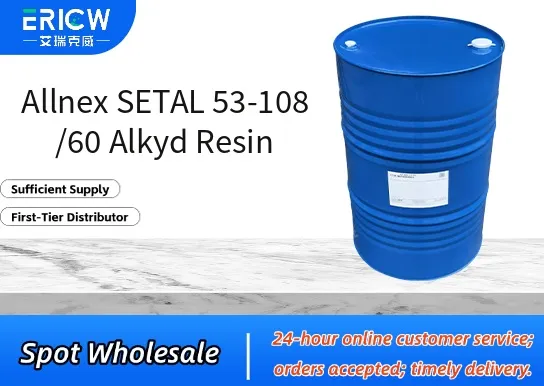
Medium-oil-length alkyd resin based on phthalic anhydride and soybean oil fatty acids.
Designed for excellent gloss retention and long-term durability in air-drying coatings.
Offers balanced drying speed and film hardness development under ambient conditions.
Provides good compatibility with common solvents, nitrocellulose, and other alkyd resins.
Delivers superior flexibility and impact resistance in finished coating films.
General-purpose decorative architectural paints (interior and exterior).
Industrial maintenance coatings for metal structures and equipment.
Wood finishing systems including varnishes and clear enamels.
Undercoats and primers requiring good sandability and adhesion.
Low-VOC reformulated solventborne industrial coatings.
| Chemical Type | Phthalic–soybean oil alkyd resin |
| Product Form | Liquid |
| Appearance | Clear to slightly hazy amber liquid |
| Primary Applications | Air-drying decorative and industrial coatings |
| Key Features | Medium oil length, ambient cure, good compatibility |
| Benefits | Balanced drying, gloss retention, flexibility, and substrate adhesion |
| Solubility | Compatible with aromatic hydrocarbons, ketones, and esters |
| Storage Stability | Stable at room temperature for ≥12 months in sealed containers |
Q1: What is the primary application area for SETAL 53-108/60?
A: SETAL 53-108/60 is a medium-oil alkyd resin designed primarily for solvent-borne decorative and industrial maintenance coatings, including primers, undercoats, and topcoats where balanced drying performance, gloss retention, and substrate adhesion are required.
Q2: Is SETAL 53-108/60 compatible with common crosslinkers used in two-component systems?
A: Yes — it exhibits good compatibility with melamine-formaldehyde resins and isothiocyanate-based hardeners, enabling formulation of baked or ambient-cure systems. Compatibility should be verified experimentally within the target solvent blend and pigment load.
Q3: How does SETAL 53-108/60 perform in terms of drying and film formation?
A: It offers balanced through-dry and surface-dry characteristics typical of medium-oil alkyds, supporting good sandability and intercoat adhesion. Drying time is influenced by film thickness, ambient temperature, humidity, and catalyst selection.
Q4: Can SETAL 53-108/60 be modified or blended with other resins?
A: Yes — it is commonly blended with acrylics, vinyls, or epoxy esters to tailor flexibility, chemical resistance, or weathering performance. Pre-testing is recommended to confirm homogeneity, storage stability, and final film properties.
Contact With Us:
E-mail: wangxingqiang@ericwchem.com
Have a Questions? Call Us:
Add:
Building A1, Jiete Industrial Park, Huangpu District, Guangzhou City, Guangdong Province, China