English
 Español
 tiếng việt
 русский
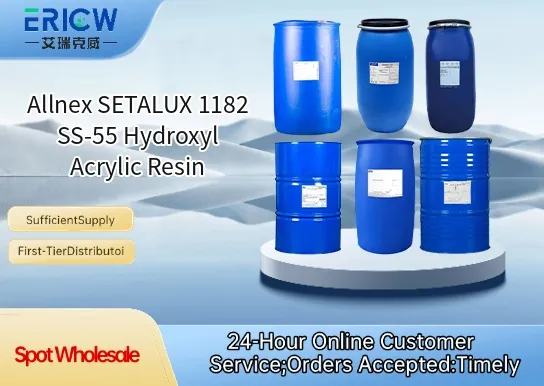
High hydroxyl functionality for excellent crosslink density with melamine and polyisocyanate curing agents.
Low VOC formulation compatible with high-solids and solvent-borne industrial coating systems.
Superior gloss retention and UV resistance in exterior applications.
Excellent compatibility with common acrylic, polyester, and cellulose ester resins.
Good flow and leveling characteristics for smooth, defect-free film formation.
Automotive OEM and refinish topcoats.
Industrial maintenance coatings for metal substrates.
General-purpose coil coatings.
High-performance can and closure coatings.
Plastic coatings requiring adhesion and flexibility.
| Chemical Type | Hydroxyl-functional acrylic copolymer |
| Product Form | Liquid resin solution |
| Appearance | Clear, pale yellow to light amber liquid |
| Solvent System | Aromatic hydrocarbons and esters |
| Hydroxyl Value (mg KOH/g) | 55–65 |
| Acid Value (mg KOH/g) | < 5 |
| Non-Volatile Content (% w/w) | 55 ± 2 |
| Viscosity (mPa·s, 25°C, Brookfield RVT) | 1,200–1,800 |
Q1: What is the primary function of SETALUX 1182 SS-55 in coating formulations?
A: SETALUX 1182 SS-55 is a hydroxyl-functional acrylic resin designed to serve as a reactive binder in two-component polyurethane and polyester-based coating systems. It contributes to film formation, enhances crosslink density, and supports key performance attributes such as hardness, chemical resistance, and gloss retention.
Q2: Is SETALUX 1182 SS-55 compatible with common isocyanate hardeners?
A: Yes, this resin is formulated for compatibility with standard aliphatic isocyanate crosslinkers—including HDI-based biuret and IPDI-based trimer types—enabling robust cure profiles in ambient- or forced-dry applications. Compatibility and reactivity should be verified under actual formulation conditions.
Q3: How does SETALUX 1182 SS-55 perform in high-gloss, low-VOC industrial topcoats?
A: It delivers excellent clarity, flow, and leveling characteristics, making it well-suited for high-gloss decorative and protective topcoats where low VOC content and rapid development of surface aesthetics are required. Its molecular design supports efficient solvent release and minimal haze formation.
Q4: Can SETALUX 1182 SS-55 be blended with other acrylic or polyester resins?
A: Yes, it exhibits good compatibility with many hydroxyl-functional acrylics, polyesters, and certain alkyds when used in co-binder systems. However, physical stability, pot life, and final film properties must be evaluated empirically for each specific blend ratio and solvent environment.
Contact With Us:
E-mail: wangxingqiang@ericwchem.com
Have a Questions? Call Us:
Add:
Building A1, Jiete Industrial Park, Huangpu District, Guangzhou City, Guangdong Province, China