English
 Español
 tiếng việt
 русский
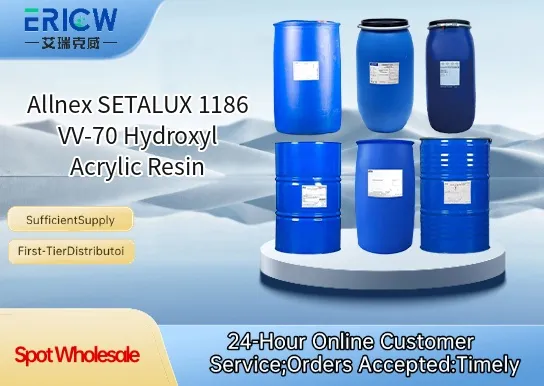
High hydroxyl functionality for excellent crosslinking efficiency with melamine and polyisocyanate curing agents.
Optimized molecular weight distribution for superior flow, leveling, and gloss development in high-performance coatings.
Low volatile organic compound (VOC) content, supporting compliance with stringent environmental regulations.
Excellent compatibility with common solvent-based acrylic and polyester resins, enabling versatile formulation flexibility.
Enhanced weatherability and UV resistance, contributing to long-term color and gloss retention.
Automotive OEM topcoats and refinish clearcoats.
Industrial maintenance coatings for metal substrates.
General-purpose coil coatings requiring durability and aesthetic performance.
High-gloss wood finishes for furniture and cabinetry.
Powder coating hybrid systems where solution-based acrylics enhance film formation.
| Chemical Type | Hydroxyl-functional acrylic resin |
| Product Form | Liquid solution in aromatic hydrocarbons and ketones |
| Appearance | Clear, pale yellow liquid |
| Hydroxyl Value (mg KOH/g) | 70–78 |
| Solids Content (% by weight) | 60 ± 2 |
| Viscosity (mPa·s at 25°C, DIN 4 mm) | 3,500–4,500 |
| Density (g/cm³ at 25°C) | 0.94–0.96 |
| Primary Applications | High-solids, low-VOC automotive and industrial coatings |
Q1: What is the primary function of SETALUX 1186 VV-70 in coating formulations?
A: SETALUX 1186 VV-70 serves as a hydroxyl-functional acrylic resin designed to act as a reactive binder in two-component polyurethane and polyester-based systems, contributing to film formation, hardness development, and chemical resistance.
Q2: Is SETALUX 1186 VV-70 compatible with common crosslinkers used in industrial coatings?
A: Yes — it is specifically formulated for compatibility with aliphatic and aromatic isocyanate crosslinkers, including HDI-based and IPDI-based polyisocyanates, and demonstrates good reactivity under ambient or forced-dry conditions.
Q3: How does the low viscosity of SETALUX 1186 VV-70 benefit formulation design?
A: Its low-viscosity profile enables high-solids formulation without excessive solvent addition, supporting improved VOC reduction, enhanced flow and leveling, and easier incorporation of pigments and additives during manufacturing.
Q4: Can SETALUX 1186 VV-70 be used in UV-curable hybrid systems?
A: While not a UV-reactive resin itself, it can be incorporated into hybrid UV/thermal systems where thermal cure of the hydroxyl-isocyanate reaction complements UV polymerization of acrylate components — formulation stability and cure balance must be validated experimentally.
Contact With Us:
E-mail: wangxingqiang@ericwchem.com
Have a Questions? Call Us:
Add:
Building A1, Jiete Industrial Park, Huangpu District, Guangzhou City, Guangdong Province, China