English
 Español
 tiếng việt
 русский
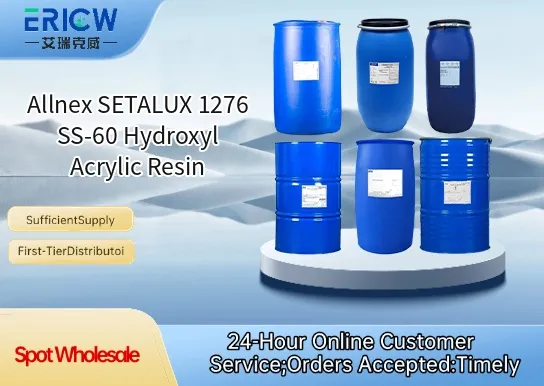
High hydroxyl functionality for excellent crosslinking density with melamine and polyisocyanate curing agents.
Low VOC formulation compliant with stringent environmental regulations including EU Directive 2004/42/EC.
Superior gloss retention and UV resistance in outdoor durable coatings.
Excellent compatibility with common solvent-based acrylic and polyester resins.
Good flow and leveling characteristics for high-appearance industrial finishes.
Automotive OEM clearcoats and basecoats.
Industrial maintenance coatings for metal substrates.
General-purpose coil coatings requiring weatherability and hardness.
High-performance appliance finishes (refrigerators, washing machines).
Architectural metal cladding and façade systems.
| Chemical Type | Hydroxyl-functional acrylic copolymer |
| Product Form | Liquid resin solution |
| Appearance | Clear to slightly yellow viscous liquid |
| Solvent System | Xylene / butyl acetate blend |
| Hydroxyl Value (mg KOH/g) | 60–68 |
| Acid Value (mg KOH/g) | < 5 |
| Non-Volatile Content (% w/w) | 60 ± 1 |
| Viscosity (mPa·s, 25°C, DIN ISO 2535) | 1,200–1,800 |
Q1: What is the primary functional role of SETALUX 1276 SS-60 in coating formulations?
A: SETALUX 1276 SS-60 serves as a hydroxyl-functional acrylic resin, designed to react with common crosslinkers such as melamine formaldehyde, polyisocyanates, or blocked isocyanates. It contributes to film formation, hardness development, and chemical resistance in thermosetting coatings.
Q2: Is this resin suitable for high-solids or low-VOC coating systems?
A: Yes — SETALUX 1276 SS-60 is formulated with a relatively low viscosity and high solids content, making it well-suited for high-solids applications and compatible with VOC-reduction strategies when used in combination with appropriate solvents and crosslinkers.
Q3: How does SETALUX 1276 SS-60 perform in terms of weathering and UV stability?
A: As a purely acrylic hydroxyl resin without aromatic monomers, it offers inherently good UV resistance and long-term gloss retention, making it appropriate for exterior architectural and industrial maintenance coatings where color and clarity stability are critical.
Q4: Can SETALUX 1276 SS-60 be blended with other resin types?
A: Yes — it demonstrates good compatibility with many common resins including polyester polyols, alkyds, and other acrylics, enabling formulators to tailor performance attributes such as flexibility, cure speed, and substrate adhesion.
Contact With Us:
E-mail: wangxingqiang@ericwchem.com
Have a Questions? Call Us:
Add:
Building A1, Jiete Industrial Park, Huangpu District, Guangzhou City, Guangdong Province, China