English
 Español
 tiếng việt
 русский
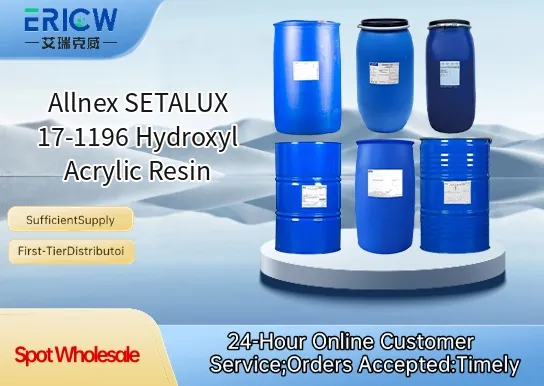
High hydroxyl functionality for excellent crosslink density with melamine and polyisocyanate curing agents.
Low viscosity enabling high-solids formulations and improved application efficiency.
Superior weather resistance and UV stability, ideal for demanding exterior coatings.
Excellent compatibility with common solvent-borne resins and additives.
Consistent batch-to-batch reproducibility supporting reliable manufacturing scale-up.
Automotive OEM and refinish topcoats.
Industrial maintenance coatings for metal substrates.
General-purpose coil coatings requiring durability and gloss retention.
High-performance architectural metal façade coatings.
Precision-engineered plastic coatings requiring adhesion and flexibility.
| Chemical Type | Hydroxyl-functional acrylic copolymer |
| Product Form | Liquid, solvent-borne |
| Appearance | Clear to pale yellow viscous liquid |
| Primary Applications | Thermosetting coatings cured with melamine or isocyanate crosslinkers |
| Key Features | High OH value, low VOC potential, good flow and leveling |
| Benefits | Enhanced hardness development, excellent gloss and clarity, robust film formation |
| Solvent System | Aromatic-free (typical: xylene/PGMEA blend) |
| Storage Stability | ≥12 months at 20–25°C in sealed container |
Q1: What is the primary function of SETALUX 17-1196 in coating formulations?
A: SETALUX 17-1196 is a hydroxyl-functional acrylic resin designed primarily as a reactive binder in two-component polyurethane (2K PU) and polyester-based crosslinking systems. It contributes to film formation, enhances hardness and chemical resistance, and supports excellent gloss retention and weatherability in high-performance industrial and automotive topcoats.
Q2: Is SETALUX 17-1196 compatible with common isocyanate crosslinkers?
A: Yes — it is specifically formulated for compatibility with aliphatic isocyanate crosslinkers such as HDI-based trimer and biuret types. Its hydroxyl functionality enables efficient curing under ambient or forced-dry conditions, delivering balanced pot life and through-cure performance in solventborne and high-solids 2K PU systems.
Q3: How does SETALUX 17-1196 perform in terms of viscosity and solubility?
A: It exhibits good solution viscosity characteristics in common organic solvents including xylene, butyl acetate, and ethyl glycol acetate, enabling easy incorporation into medium-to-high solids coating formulations. Its molecular design provides stable solution behavior without excessive gel risk during storage or processing.
Q4: Can SETALUX 17-1196 be used in low-VOC or high-solids applications?
A: Yes — its relatively low inherent viscosity and high solid content support formulation flexibility for high-solids 2K PU coatings. When combined with appropriate solvents and crosslinkers, it helps formulators meet evolving VOC regulations without compromising film integrity or application properties.
Contact With Us:
E-mail: wangxingqiang@ericwchem.com
Have a Questions? Call Us:
Add:
Building A1, Jiete Industrial Park, Huangpu District, Guangzhou City, Guangdong Province, China