English
 Español
 tiếng việt
 русский
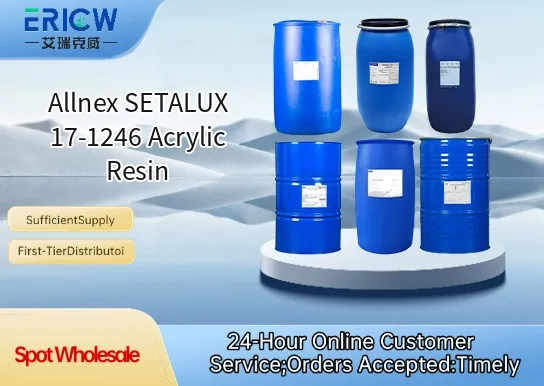
High-gloss, durable acrylic binder for solventborne industrial coatings.
Excellent compatibility with melamine formaldehyde crosslinkers and common solvents.
Good flow and leveling characteristics for smooth, defect-free film formation.
Superior UV resistance and long-term color retention in exterior applications.
Optimized molecular weight distribution for balanced hardness, flexibility, and recoatability.
Automotive OEM and refinish topcoats.
Industrial maintenance coatings for metal substrates.
General-purpose decorative and protective coil coatings.
High-performance appliance finishes (e.g., refrigerators, washing machines).
Architectural metal cladding and façade systems.
| Chemical Type | Solventborne acrylic copolymer |
| Product Form | Liquid resin solution |
| Appearance | Clear, pale yellow to amber liquid |
| Primary Applications | Thermosetting high-gloss industrial coatings |
| Key Features | High gloss, UV stability, melamine compatibility |
| Benefits | Excellent durability, color retention, and application performance |
| Solvent System | Aromatic hydrocarbons and esters (typical) |
| Storage Stability | ≥12 months at 20–25°C in sealed container |
Q1: What is the primary application field for SETALUX 17-1246?
A: SETALUX 17-1246 is a solvent-based acrylic resin specifically designed for high-performance industrial coatings, particularly in coil and can coatings where excellent gloss retention, flexibility, and resistance to humidity and chemical exposure are required.
Q2: Is SETALUX 17-1246 compatible with common crosslinkers used in industrial baking systems?
A: Yes, it is formulated to react efficiently with standard amino crosslinkers such as melamine-formaldehyde resins under typical coil coating cure conditions (e.g., 230–260 °C for short dwell times), delivering robust film integrity and crosslink density.
Q3: How does SETALUX 17-1246 contribute to film flexibility and formability in coil coating applications?
A: Its molecular architecture provides balanced rigidity and chain mobility, enabling exceptional elongation and resistance to cracking during post-coating forming operations like bending, seaming, or drawing—critical for metal substrates in appliance and building products.
Q4: Can SETALUX 17-1246 be used in low-VOC formulations?
A: While supplied in solvent-based form, it can be integrated into reformulated systems targeting reduced VOC content—especially when combined with high-solids amino resins or optimized solvent blends—without compromising cure response or mechanical performance.
Contact With Us:
E-mail: wangxingqiang@ericwchem.com
Have a Questions? Call Us:
Add:
Building A1, Jiete Industrial Park, Huangpu District, Guangzhou City, Guangdong Province, China