English
 Español
 tiếng việt
 русский
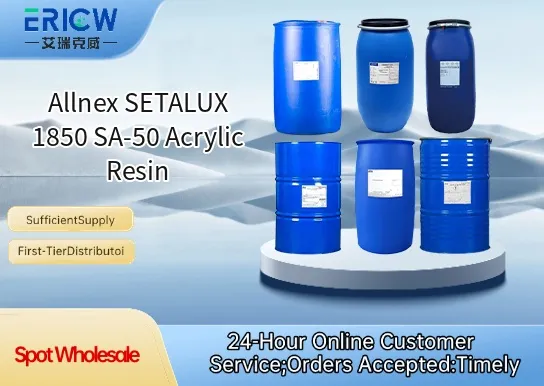
High-solids, solvent-based acrylic resin offering excellent gloss and clarity in clearcoats.
Designed for superior weather resistance and UV stability in demanding outdoor applications.
Provides outstanding flow, leveling, and substrate wetting for smooth, defect-free films.
Compatible with common crosslinkers including melamine and polyisocyanates for thermoset systems.
Delivers balanced hardness and flexibility to resist cracking and micro-checking over time.
Automotive refinish clearcoats and basecoat/clearcoat systems.
Industrial maintenance coatings for transportation equipment and metal structures.
Architectural metal coatings requiring long-term color and gloss retention.
General-purpose high-performance topcoats for OEM and aftermarket applications.
| Chemical Type | Solvent-based acrylic copolymer |
| Product Form | Liquid resin solution |
| Appearance | Clear, pale yellow liquid |
| Solvent System | Aromatic hydrocarbon / ester blend |
| Solids Content (wt%) | ~50% (as supplied) |
| Viscosity (DIN ISO 2535, 23°C) | ~20–30 s (4 mm cup) |
| Acid Value (mg KOH/g) | ~5–10 |
| Primary Applications | Thermosetting clearcoats and topcoats |
Q1: What is the primary application field for SETALUX 1850 SA-50?
A: SETALUX 1850 SA-50 is a solvent-based acrylic resin designed primarily for high-performance industrial coatings, especially in coil and pre-painted metal applications where excellent gloss retention, weather resistance, and compatibility with polyester and melamine crosslinkers are required.
Q2: Is SETALUX 1850 SA-50 compatible with common crosslinking agents?
A: Yes — it is formulated to be highly compatible with amino resins (e.g., melamine-formaldehyde), as well as with polyester and polyurethane systems. Its functional group balance supports efficient curing under typical industrial baking conditions.
Q3: How does SETALUX 1850 SA-50 contribute to film performance in coil coating formulations?
A: It delivers strong pigment wetting, good flow and leveling, and enhances final film hardness and UV stability. Its molecular architecture supports balanced flexibility and durability, making it suitable for substrates requiring both formability and long-term outdoor exposure resistance.
Q4: What solvents are recommended for dilution and processing?
A: It is typically processed in aromatic hydrocarbons (e.g., xylene, Solvesso™ types) and ketones (e.g., MEK, MIBK). Formulators should verify compatibility and evaporation profile with their full solvent blend to ensure optimal viscosity control and film formation.
Q5: Can SETALUX 1850 SA-50 be used in low-VOC formulations?
A: While it is a solvent-based resin, its high solids content allows for VOC reduction strategies when combined with high-boiling, low-volatility solvents or reactive diluents — though reformulation efforts must consider cure kinetics and regulatory compliance requirements specific to the target market.
Contact With Us:
E-mail: wangxingqiang@ericwchem.com
Have a Questions? Call Us:
Add:
Building A1, Jiete Industrial Park, Huangpu District, Guangzhou City, Guangdong Province, China