English
 Español
 tiếng việt
 русский
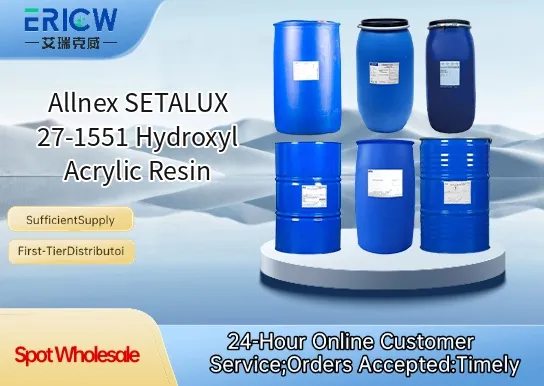
High hydroxyl functionality for excellent crosslink density with melamine and polyisocyanate curing agents.
Outstanding weatherability and UV resistance, ideal for demanding exterior coatings.
Good compatibility with common solventborne resins and additives used in industrial coatings.
Low viscosity profile enabling high-solids formulation without sacrificing flow or leveling.
Consistent batch-to-batch performance supported by Allnex’s stringent quality control protocols.
Automotive OEM and refinish topcoats requiring gloss retention and chip resistance.
Industrial maintenance coatings for metal structures exposed to harsh environmental conditions.
General-purpose coil coatings where durability and process efficiency are critical.
High-performance wood finishes for architectural and furniture applications.
Precision plastic coatings for electronics housings and consumer appliances.
| Chemical Type | Hydroxyl-functional acrylic copolymer |
| Product Form | Liquid resin solution |
| Appearance | Clear to slightly yellow, homogeneous liquid |
| Solvent System | Aromatic hydrocarbons (e.g., xylene, Solvesso™) |
| Hydroxyl Value (mg KOH/g) | 65–75 |
| Acid Value (mg KOH/g) | < 5 |
| Non-Volatile Content (% w/w) | 55–60 |
| Viscosity (DIN 4, 23°C, mPa·s) | 4,000–7,000 |
Q1: What is the primary function of SETALUX 27-1551 in coating formulations?
A: SETALUX 27-1551 is a hydroxyl-functional acrylic resin designed to serve as a reactive binder in two-component polyurethane and polyester-based systems. It contributes to film formation, enhances crosslink density, and supports key performance attributes such as hardness, chemical resistance, and gloss retention.
Q2: Which types of curing agents are compatible with this resin?
A: SETALUX 27-1551 is formulated for use with aliphatic isocyanate crosslinkers, including HDI-based trimer and biuret types. It is not intended for aromatic isocyanates or non-isocyanate curing systems without prior compatibility testing.
Q3: Can this resin be used in high-solids or low-VOC coatings?
A: Yes — SETALUX 27-1551 is suitable for medium-to-high solids formulations and supports VOC-reduction strategies when paired with appropriate solvents and crosslinkers. Its molecular design helps maintain viscosity control and application stability at reduced solvent levels.
Q4: How does SETALUX 27-1551 compare to other hydroxyl acrylic resins in terms of yellowing resistance?
A: As an aliphatic acrylic resin, SETALUX 27-1551 offers inherently superior UV and thermal stability compared to aromatic alternatives, resulting in excellent long-term color retention and minimal yellowing in clearcoats and light-colored topcoats.
Contact With Us:
E-mail: wangxingqiang@ericwchem.com
Have a Questions? Call Us:
Add:
Building A1, Jiete Industrial Park, Huangpu District, Guangzhou City, Guangdong Province, China