English
 Español
 tiếng việt
 русский
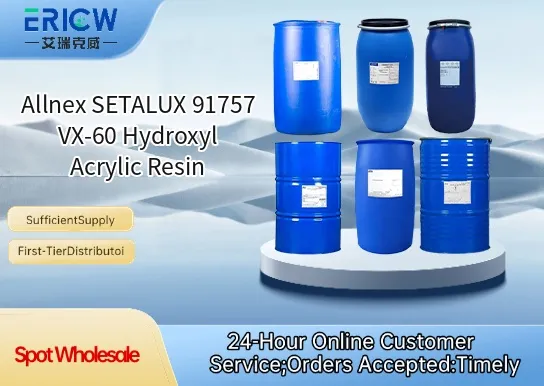
High hydroxyl functionality for efficient crosslinking with melamine and polyisocyanate curing agents.
Excellent compatibility with common solventborne and high-solids coating systems.
Superior gloss retention and UV resistance in exterior durable topcoats.
Low viscosity enables high-solids formulation without sacrificing application performance.
Consistent batch-to-batch reproducibility meeting stringent automotive OEM requirements.
Automotive original equipment manufacturer (OEM) topcoats.
Automotive refinish clearcoats and basecoats.
Industrial maintenance coatings for metal substrates.
High-performance coil coatings requiring excellent formability and weatherability.
Premium architectural coatings for aluminum extrusions and façade systems.
| Chemical Type | Hydroxyl-functional acrylic copolymer |
| Product Form | Liquid resin solution |
| Appearance | Clear, pale yellow liquid |
| Solvent System | Aromatic-free, high-flash solvents (e.g., acetate esters, ketones) |
| Hydroxyl Value (mg KOH/g) | 68–74 |
| Acid Value (mg KOH/g) | < 5 |
| Non-Volatile Content (% w/w) | 60 ± 2 |
| Viscosity (mPa·s, 25°C, #3 spindle, 60 rpm) | 8,000–12,000 |
Q1: What is the primary function of SETALUX 91757 VX-60 in a coating formulation?
A: SETALUX 91757 VX-60 serves as a hydroxyl-functional acrylic resin, primarily used as a reactive binder in two-component polyurethane and polyester-based coating systems. It contributes to film formation, hardness development, chemical resistance, and long-term durability.
Q2: Is this resin suitable for high-gloss, low-VOC industrial topcoats?
A: Yes — SETALUX 91757 VX-60 is specifically designed for high-performance, low-VOC applications including automotive refinish, industrial maintenance, and general-purpose topcoats where excellent clarity, gloss retention, and weatherability are required.
Q3: How does SETALUX 91757 VX-60 compare to conventional hydroxyl acrylic resins in terms of cure speed and flexibility?
A: This resin offers a balanced profile: it enables efficient crosslinking with common isocyanate hardeners while maintaining good film flexibility and impact resistance — making it well-suited for substrates requiring both mechanical robustness and aesthetic performance.
Q4: Can SETALUX 91757 VX-60 be blended with other hydroxyl resins or non-reactive acrylics?
A: Yes — it demonstrates good compatibility with a range of hydroxyl-functional resins (e.g., polyester, alkyd, or other acrylic types) and non-reactive acrylic modifiers, allowing formulators to fine-tune properties such as flow, leveling, and Tg without compromising crosslink density.
Contact With Us:
E-mail: wangxingqiang@ericwchem.com
Have a Questions? Call Us:
Add:
Building A1, Jiete Industrial Park, Huangpu District, Guangzhou City, Guangdong Province, China