English
 Español
 tiếng việt
 русский
High hydroxyl functionality for excellent crosslinking efficiency with melamine and polyisocyanate curing agents.
Low VOC formulation compliant with stringent global environmental regulations including EU REACH and US EPA standards.
Superior gloss retention and long-term weatherability in outdoor coating applications.
Excellent compatibility with common solvent-borne acrylics, alkyds, and polyester resins.
Good flow and leveling characteristics enabling high-quality, defect-free film formation.
Automotive OEM topcoats and clearcoats.
Industrial maintenance coatings for metal substrates.
Powder coating hybrid systems requiring hydroxyl functionality.
High-performance coil coatings for architectural and appliance applications.
Refinish coatings requiring fast cure and exceptional durability.
| Chemical Type | Hydroxyl-functional acrylic resin |
| Product Form | Liquid, solvent-borne |
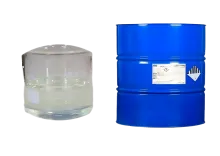
| Appearance | Clear, pale yellow liquid |
| Primary Applications | OEM automotive, industrial coatings, refinish |
| Key Features | High OH value, low viscosity, excellent compatibility |
| Benefits | Enhanced hardness development, improved chemical resistance, reduced baking time |
| Solvent System | Aromatic-free (proprietary ester/alcohol blend) |
| Storage Stability | 12 months at 25°C in sealed container |
Q1: What is the primary function of SETALUX D A 870 BA in coating formulations?
A: SETALUX D A 870 BA is a hydroxyl-functional acrylic resin designed to serve as a reactive binder in two-component polyurethane and melamine-cured systems. It contributes to film formation, enhances crosslink density, and supports key performance attributes such as hardness, chemical resistance, and gloss retention.
Q2: Is this resin suitable for high-solids or low-VOC coating applications?
A: Yes — SETALUX D A 870 BA is formulated with a relatively low viscosity and high solids content, making it well-suited for high-solids architectural, industrial, and automotive refinish coatings where VOC reduction is a priority. Its compatibility with common low-VOC solvent blends supports formulation flexibility without compromising flow or cure response.
Q3: Which crosslinkers are typically recommended for use with this resin?
A: SETALUX D A 870 BA is optimized for reaction with aliphatic isocyanates (e.g., HDI-based polyisocyanates) and amino resins (e.g., highly methylolated melamines). Selection depends on end-use requirements: aliphatic isocyanates are preferred for exterior durability and UV stability, while melamine crosslinkers are often chosen for baking applications requiring rapid cure at elevated temperatures.
Q4: How does this resin perform in terms of weathering and UV resistance?
A: As a purely acrylic hydroxyl resin with no aromatic backbone, SETALUX D A 870 BA delivers excellent inherent UV stability and resistance to chalking or yellowing. When cured with aliphatic isocyanates, the resulting films exhibit strong long-term color and gloss retention under outdoor exposure conditions.
Q5: Can it be used in waterborne hybrid systems?
A: While SETALUX D A 870 BA is solvent-based, it can be incorporated into solvent-borne or solvent-reduced hybrid systems where partial water dilution or co-solvent adjustment is employed. However, it is not inherently emulsifiable and is not intended for direct use in fully waterborne dispersions without modification or external stabilization.
Contact With Us:
E-mail: wangxingqiang@ericwchem.com
Have a Questions? Call Us:
Add:
Building A1, Jiete Industrial Park, Huangpu District, Guangzhou City, Guangdong Province, China