English
 Español
 tiếng việt
 русский
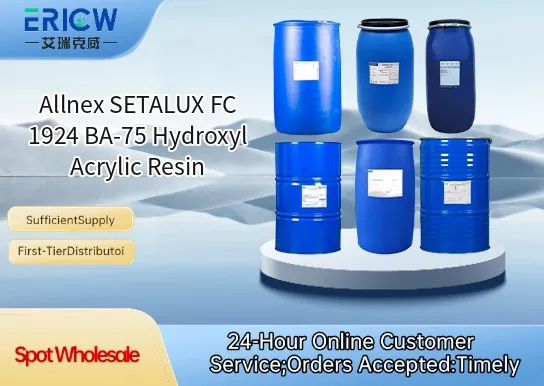
High hydroxyl functionality for robust crosslinking with melamine and polyisocyanate curing agents.
Excellent compatibility with common solvent-based coating systems including nitrocellulose and polyester blends.
Superior gloss retention and weather resistance in exterior architectural and industrial topcoats.
Low viscosity profile enabling high-solids formulation without sacrificing flow or leveling.
Consistent batch-to-batch reproducibility supported by Allnex’s stringent quality control standards.
Automotive OEM clearcoats and basecoat/clearcoat systems.
Industrial maintenance coatings for metal substrates requiring long-term durability.
Architectural metal cladding and façade coatings exposed to UV and moisture.
General-purpose high-performance solventborne topcoats for machinery and equipment.
Refinish coatings requiring rapid cure response and excellent film hardness development.
| Chemical Type | Hydroxyl-functional acrylic copolymer |
| Product Form | Liquid resin solution |
| Appearance | Clear, pale yellow liquid |
| Solvent System | Xylene / butyl acetate blend |
| Non-Volatile Content (wt%) | 74–76% |
| Hydroxyl Value (mg KOH/g) | 130–145 |
| Acid Value (mg KOH/g) | < 5 |
| Viscosity (mPa·s, 25°C) | 800–1,200 |
Q1: What is the primary function of SETALUX FC 1924 BA-75 in coating formulations?
A: SETALUX FC 1924 BA-75 serves as a hydroxyl-functional acrylic resin designed to act as a reactive binder in two-component polyurethane and polyester-based systems. It contributes to film formation, enhances crosslink density, and supports improved hardness, chemical resistance, and gloss retention after cure.
Q2: Is this resin suitable for high-solids or low-VOC coating applications?
A: Yes — SETALUX FC 1924 BA-75 is formulated to support high-solids systems and is commonly incorporated into low-VOC industrial coatings, including automotive refinish and general metal finishing, where reduced solvent content and efficient film build are required.
Q3: How does SETALUX FC 1924 BA-75 differ from conventional hydroxyl acrylic resins in terms of compatibility?
A: This grade exhibits broad compatibility with common isocyanate crosslinkers (e.g., HDI and IPDI trimer types) and demonstrates good miscibility with other acrylics, melamines, and select polyester resins — enabling formulation flexibility without significant risk of haze or phase separation under standard processing conditions.
Q4: What are typical storage and handling recommendations?
A: Store in tightly sealed containers in a cool, dry, well-ventilated area away from direct sunlight and sources of ignition. Avoid prolonged exposure to moisture or extreme temperatures. Prior to use, ensure adequate mixing to maintain homogeneity, especially if stored for extended periods.
Contact With Us:
E-mail: wangxingqiang@ericwchem.com
Have a Questions? Call Us:
Add:
Building A1, Jiete Industrial Park, Huangpu District, Guangzhou City, Guangdong Province, China