English
 Español
 tiếng việt
 русский
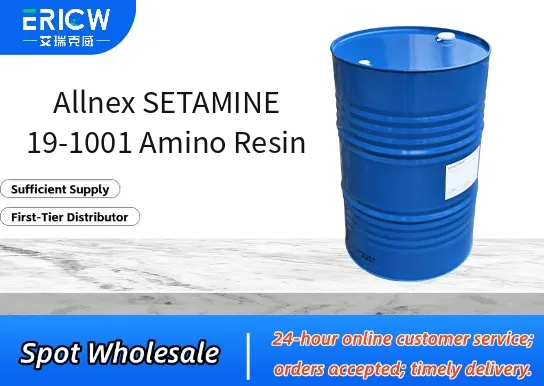
Highly reactive melamine-formaldehyde resin offering excellent crosslinking efficiency in ambient- and heat-cured systems.
Low free formaldehyde content, supporting compliance with stringent environmental and occupational health regulations.
Excellent compatibility with acrylic, polyester, and alkyd resins for broad formulation flexibility.
Provides superior hardness, chemical resistance, and gloss retention in thermoset coatings.
Designed for low-viscosity formulations, enabling high-solids and solvent-reduced coating systems.
Automotive OEM and refinish topcoats requiring high durability and aesthetic performance.
Industrial coil coatings for metal substrates demanding excellent corrosion resistance and formability.
Can and closure coatings where food-contact compliance and substrate adhesion are critical.
Wood furniture and panel coatings requiring rapid cure, mar resistance, and clarity.
General-purpose appliance coatings requiring balanced cure speed, hardness, and flexibility.
| Chemical Type | Melamine-formaldehyde amino resin |
| Product Form | Liquid |
| Appearance | Clear to slightly hazy, colorless to pale yellow liquid |
| Non-Volatile Content (wt%, ISO 3251) | 78–82% |
| Viscosity (mPa·s, 25°C, ISO 2555) | 150–350 |
| Free Formaldehyde (wt%, ISO 12999) | ≤0.3% |
| pH (25°C, 10% solution in deionized water) | 7.5–9.0 |
| Primary Applications | Thermosetting coatings for metal, wood, and plastic substrates |
Q1: What is the primary function of SETAMINE 19-1001 in coating formulations?
A: SETAMINE 19-1001 is a low-viscosity, highly reactive amino resin designed to serve as a crosslinker for hydroxyl-functional resins—particularly acrylics and alkyds—in thermosetting coatings. It enhances hardness, chemical resistance, and cure speed under conventional baking conditions.
Q2: Is SETAMINE 19-1001 compatible with acid-catalyzed systems?
A: Yes—it is commonly used with strong or weak organic acid catalysts (e.g., p-toluenesulfonic acid or blocked acids) to achieve efficient curing at moderate temperatures. Catalyst selection and dosage should be optimized based on desired pot life, film formation, and final performance requirements.
Q3: How does SETAMINE 19-1001 compare to traditional melamine-formaldehyde resins in terms of formaldehyde release?
A: As a partially methylated melamine-based resin, SETAMINE 19-1001 exhibits lower free formaldehyde content compared to fully unmodified melamine resins. Its formulation supports reduced emissions during cure, aligning with industry trends toward lower-VOC and more sustainable coating systems.
Q4: Can SETAMINE 19-1001 be used in waterborne coatings?
A: Yes—it demonstrates good compatibility with many water-reducible and hybrid acrylic or polyester dispersions. However, hydrolytic stability and coalescence behavior should be verified in the full formulation, especially under varying pH and storage conditions.
Q5: What are typical handling and storage recommendations?
A: Store in tightly sealed containers in a cool, dry, well-ventilated area away from direct sunlight and strong oxidizers. Avoid prolonged exposure to moisture or high humidity. Shelf life is typically 12 months under recommended conditions; always confirm suitability prior to use in production.
Contact With Us:
E-mail: wangxingqiang@ericwchem.com
Have a Questions? Call Us:
Add:
Building A1, Jiete Industrial Park, Huangpu District, Guangzhou City, Guangdong Province, China