English
 Español
 tiếng việt
 русский
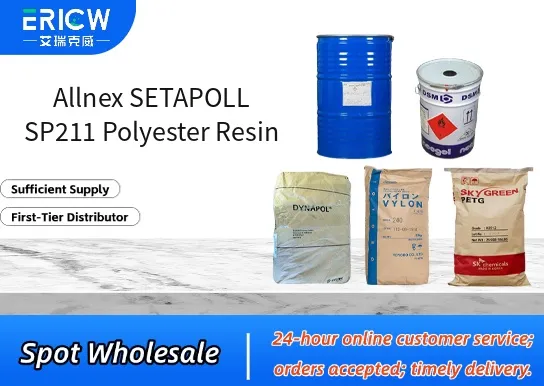
High-solids, low-viscosity unsaturated polyester resin designed for excellent processability in spray and roller applications.
Offers balanced reactivity and extended pot life for improved production flexibility and reduced waste.
Delivers superior surface hardness and gloss retention after curing, even under ambient or low-energy UV/LED conditions.
Compatible with standard peroxide initiators and common reactive diluents such as styrene and vinyl toluene.
Formulated for low volatile organic compound (VOC) emissions, supporting compliance with stringent environmental regulations.
UV- and LED-curable coatings for industrial wood substrates including MDF, particleboard, and veneer.
High-performance clearcoats and pigmented topcoats for furniture, kitchen cabinets, and architectural millwork.
Roller-applied and curtain-coated finishes for continuous-line wood finishing operations.
Hybrid UV/thermal systems requiring ambient cure capability prior to final UV exposure.
Decorative laminates and coated panels requiring excellent mar resistance and chemical durability.
| Chemical Type | Unsaturated polyester resin |
| Product Form | Liquid |
| Appearance | Clear, pale yellow viscous liquid |
| Primary Applications | UV/LED-curable wood coatings, high-gloss decorative finishes |
| Key Features | High solids, low viscosity, ambient-compatible reactivity |
| Benefits | Improved line speed, reduced energy consumption, low VOC |
| Storage Stability | ≥6 months at 25 °C in sealed original container |
| Recommended Initiator | Benzoyl peroxide or aliphatic peroxides (e.g., Luperox® 101) |
Q1: What is the primary function of SETAPOLL SP211 in polyester-based coating systems?
A: SETAPOLL SP211 functions as a reactive diluent and viscosity modifier, enabling improved flow, leveling, and film formation while maintaining crosslink density in unsaturated polyester and vinyl ester resin systems.
Q2: Is SETAPOLL SP211 compatible with common free-radical initiators used in ambient- or thermally-cured polyester coatings?
A: Yes, SETAPOLL SP211 is fully compatible with standard peroxide initiators such as MEKP and BPO, and does not interfere with conventional free-radical polymerization kinetics under typical curing conditions.
Q3: How does SETAPOLL SP211 compare to styrene in terms of VOC content and handling safety?
A: SETAPOLL SP211 is a low-VOC, non-styrenated alternative designed to reduce odor and improve workplace exposure profiles compared to traditional styrene-based diluents, while retaining reactivity and compatibility in polyester formulations.
Q4: Can SETAPOLL SP211 be used in high-solids or solvent-free polyester systems?
A: Yes — its low volatility and high functionality make it well-suited for high-solids and emerging solvent-free polyester applications where reduced emissions and enhanced rheological control are required.
Contact With Us:
E-mail: wangxingqiang@ericwchem.com
Have a Questions? Call Us:
Add:
Building A1, Jiete Industrial Park, Huangpu District, Guangzhou City, Guangdong Province, China