English
 Español
 tiếng việt
 русский
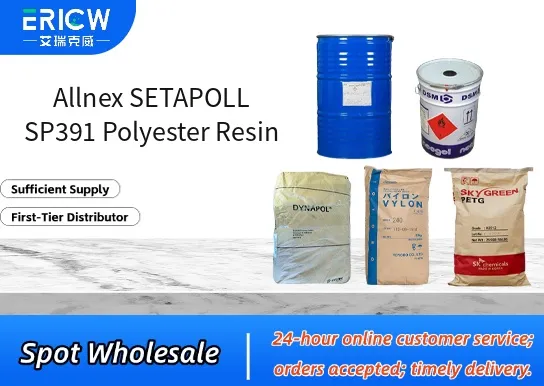
High-solids, low-viscosity unsaturated polyester resin designed for efficient processing in spray and flow-coating systems.
Excellent compatibility with standard styrene monomers and common free-radical initiators.
Provides balanced cure speed and extended pot life under ambient and elevated temperature conditions.
Delivers superior surface hardness, gloss retention, and chemical resistance in cured films.
Formulated to meet stringent VOC regulations with reduced styrene emission potential during application.
Fiberglass-reinforced plastic (FRP) components for transportation and infrastructure.
Marine gelcoats and topcoats requiring weatherability and hydrolytic stability.
Industrial maintenance coatings for steel and concrete substrates.
Architectural precast concrete form liners and decorative panels.
Composite wind turbine blade matrices and structural pultrusion profiles.
| Chemical Type | Unsaturated Polyester Resin |
| Product Form | Liquid |
| Appearance | Clear to pale yellow, homogeneous liquid |
| Primary Applications | Gelcoats, laminating resins, industrial coatings |
| Key Features | High solids, low viscosity, styrene-compatible, fast-curing |
| Benefits | Improved application efficiency, reduced emissions, enhanced durability |
| Storage Stability | ≥6 months at 25°C in sealed container |
| Recommended Styrene Content | 30–35 wt% (adjustable per formulation) |
Q1: What is the primary function of SETAPOLL SP391 in coating formulations?
A: SETAPOLL SP391 is a reactive polyester resin designed to serve as a crosslinker—particularly for hydroxyl-functional acrylics and polyesters—in thermosetting coil and general industrial coatings. It contributes to improved hardness, chemical resistance, and film integrity upon cure.
Q2: Is SETAPOLL SP391 suitable for low-bake or ambient-cure systems?
A: SETAPOLL SP391 is formulated for thermal curing and typically requires elevated temperatures (e.g., 140–200 °C) to achieve full crosslinking. It is not intended for true ambient-cure applications, though reactivity can be enhanced with appropriate catalysts in moderate-bake scenarios.
Q3: How does SETAPOLL SP391 compare to traditional melamine-formaldehyde crosslinkers in terms of formaldehyde release?
A: As a polyester-based crosslinker, SETAPOLL SP391 contains no free formaldehyde and does not generate formaldehyde during cure—unlike many conventional melamine resins. This supports formulation strategies aimed at reducing formaldehyde emissions without compromising performance.
Q4: What solvents or diluents are commonly used to adjust viscosity for application?
A: SETAPOLL SP391 is fully soluble in common organic solvents such as xylene, aromatic hydrocarbons, esters (e.g., butyl acetate), and ketones (e.g., methyl isobutyl ketone). Selection should consider compatibility with the base resin and regulatory requirements for VOC content.
Contact With Us:
E-mail: wangxingqiang@ericwchem.com
Have a Questions? Call Us:
Add:
Building A1, Jiete Industrial Park, Huangpu District, Guangzhou City, Guangdong Province, China