English
 Español
 tiếng việt
 русский
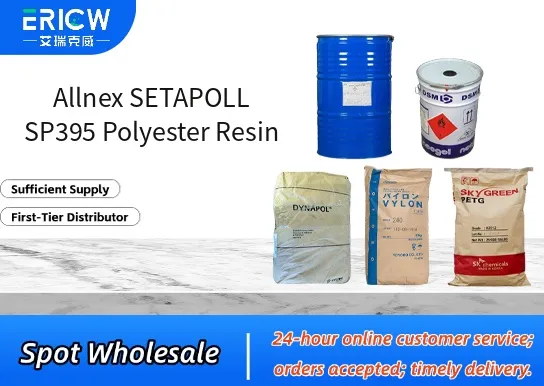
High-solids, low-viscosity unsaturated polyester resin for excellent application performance and reduced VOC emissions.
Outstanding weather resistance and UV stability, enabling long-term durability in outdoor applications.
Excellent mechanical strength and chemical resistance after curing, particularly against water and mild alkalis.
Good compatibility with standard peroxide initiators and styrene monomer systems.
Consistent batch-to-batch reproducibility, supporting reliable manufacturing and quality control.
Fiberglass-reinforced plastic (FRP) components for transportation and infrastructure.
Marine hulls, decks, and structural parts requiring corrosion and moisture resistance.
Architectural cladding panels and façade systems exposed to harsh environmental conditions.
Tanks and secondary containment systems for industrial chemical storage.
| Chemical Type | Unsaturated polyester resin |
| Product Form | Liquid |
| Appearance | Clear to pale yellow viscous liquid |
| Primary Applications | FRP laminates, pultrusion, filament winding, and spray-up processes |
| Key Features | High solids content, low styrene emission profile, excellent gel time control |
| Benefits | Improved worker safety, reduced emissions compliance burden, enhanced surface finish |
| Storage Conditions | Store below 25 °C in tightly sealed containers, away from direct sunlight and peroxides |
| Shelf Life | 6 months from date of manufacture under recommended storage conditions |
Q1: What is the primary function of SETAPOLL SP395 in polyester-based coating systems?
A: SETAPOLL SP395 is a specialty reactive diluent and viscosity modifier designed to reduce formulation viscosity without sacrificing crosslink density or final film performance. It participates in the curing reaction, contributing to enhanced hardness, flexibility, and chemical resistance in thermoset polyester coatings.
Q2: Is SETAPOLL SP395 compatible with standard polyester resins and common crosslinkers?
A: Yes — it is fully compatible with saturated and unsaturated polyester resins, as well as conventional crosslinking agents such as melamine-formaldehyde and triglycidyl isocyanurate (TGIC). Its reactivity profile supports integration into both solventborne and high-solids polyester powder and liquid coating formulations.
Q3: How does SETAPOLL SP395 affect cure kinetics and film formation?
A: SETAPOLL SP395 promotes efficient network formation during thermal cure, supporting rapid development of mechanical properties. It helps maintain good flow and leveling while enabling robust film integrity at typical industrial cure schedules (e.g., 180–200 °C for 10–20 minutes), without significant volatility or blooming issues.
Q4: Can SETAPOLL SP395 be used in low-VOC or high-solids applications?
A: Yes — its low volatility and high functionality make it particularly suitable for high-solids liquid coatings and powder coating formulations where VOC reduction and resin efficiency are critical. It contributes to reduced overall solvent demand without compromising application stability or cured film quality.
Contact With Us:
E-mail: wangxingqiang@ericwchem.com
Have a Questions? Call Us:
Add:
Building A1, Jiete Industrial Park, Huangpu District, Guangzhou City, Guangdong Province, China