English
 Español
 tiếng việt
 русский
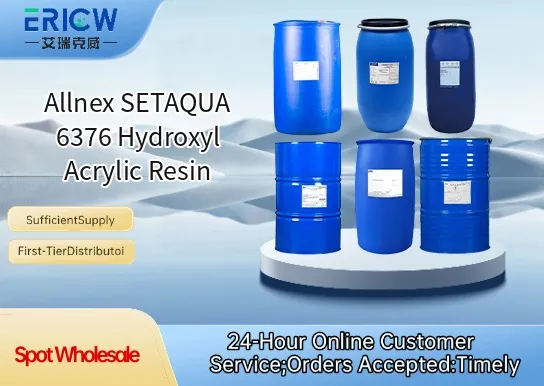
High hydroxyl functionality for excellent crosslinking density with melamine and polyisocyanate curing agents.
Low VOC formulation compliant with stringent environmental regulations including EU Directive 2004/42/EC.
Superior gloss retention and long-term weather resistance in outdoor coating applications.
Excellent compatibility with common acrylic and polyester resins, enabling versatile formulation flexibility.
Good flow and leveling characteristics for high-appearance industrial and automotive topcoats.
Automotive refinish clearcoats and basecoats.
Industrial maintenance coatings for metal substrates.
General-purpose coil coatings requiring durability and UV stability.
Plastic coatings for automotive interior trim and electronics housings.
High-performance architectural façade coatings.
| Chemical Type | Hydroxyl-functional acrylic copolymer |
| Product Form | Clear liquid |
| Appearance | Colorless to pale yellow, transparent |
| Solvent System | Water-reducible (aqueous dispersion stabilized with co-solvents) |
| Hydroxyl Value (mg KOH/g) | 85–95 |
| Non-Volatile Content (% w/w) | 35–38 |
| pH (10% aqueous solution) | 7.5–8.5 |
| Viscosity (DIN 4, 23°C) | 20–40 mPa·s |
Q1: What is the primary function of SETAQUA 6376 in waterborne coating systems?
A: SETAQUA 6376 serves as a hydroxyl-functional acrylic resin designed to act as a reactive binder in two-component (2K) waterborne polyurethane systems. It provides crosslinking sites for isocyanate curing agents, contributing to film formation, hardness development, and chemical resistance.
Q2: Is SETAQUA 6376 compatible with common waterborne polyisocyanate hardeners?
A: Yes, it is formulated for compatibility with standard aliphatic water-dispersible polyisocyanates, including HDI- and IPDI-based crosslinkers. Optimal performance is achieved when matched with hardeners recommended by Allnex technical guidelines and validated through formulation testing.
Q3: How does SETAQUA 6376 support low-VOC compliance in finished coatings?
A: As a waterborne resin with negligible organic solvent content, SETAQUA 6376 enables formulators to develop high-performance coatings that meet stringent regional VOC regulations—without compromising on cure speed or final film properties.
Q4: Can SETAQUA 6376 be used in ambient-cure applications?
A: Yes, it is suitable for ambient- and forced-dry curing conditions. Final film properties—including hardness build, flexibility, and resistance—depend on crosslinker selection, catalyst use, humidity control, and drying time, and should be verified under intended application conditions.
Contact With Us:
E-mail: wangxingqiang@ericwchem.com
Have a Questions? Call Us:
Add:
Building A1, Jiete Industrial Park, Huangpu District, Guangzhou City, Guangdong Province, China